
Talent Talk: Sally Bjerre Gaarde
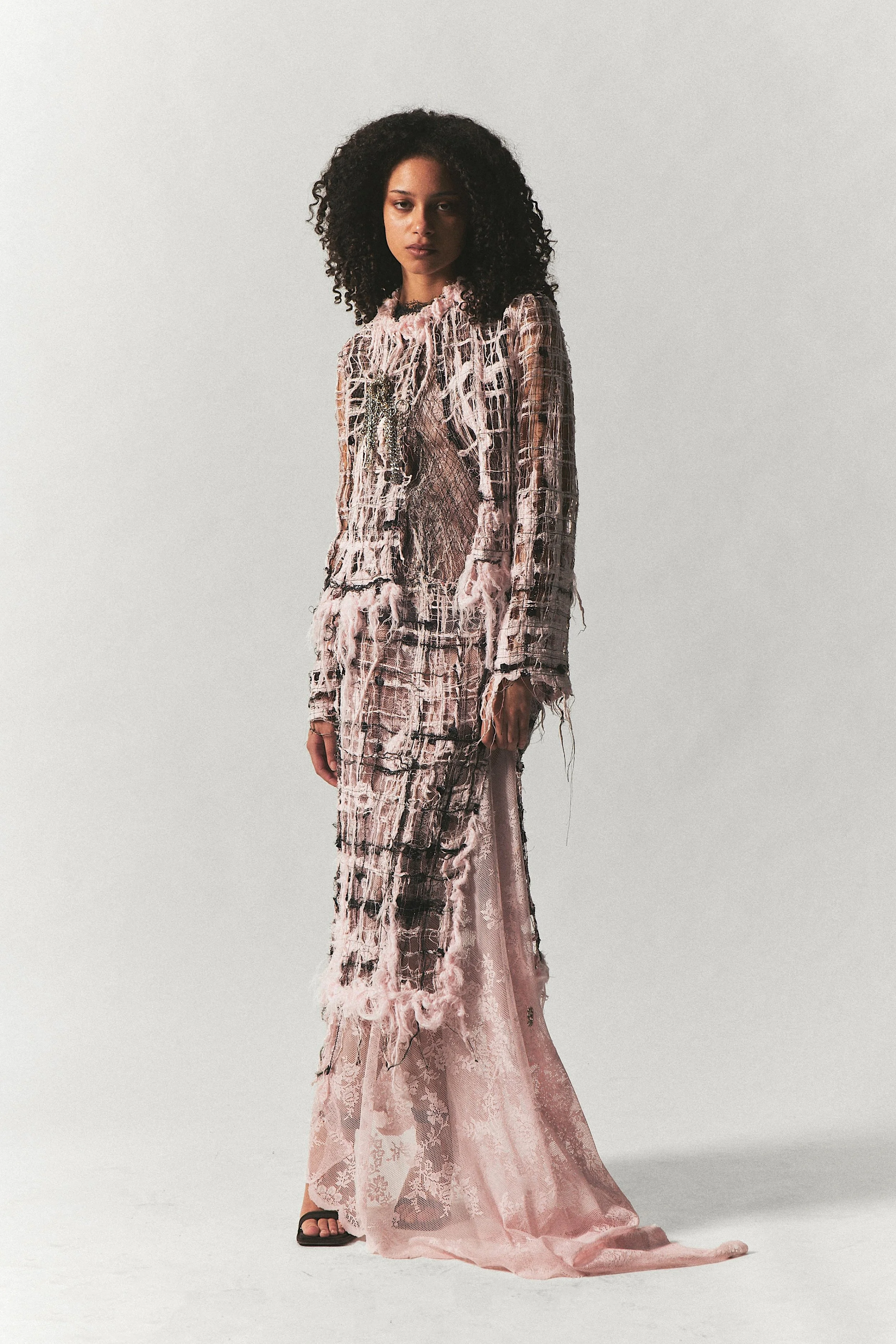
Grounded in upcycling and craftsmanship, Sally Bjerre Gaarde approaches fashion as a practice of looking backwards to imagine what might come next. With a material-led practice she explores the space between fashion, craft and cultural memory, transforming existing materials and references through meticulous textile processes.
Photograph by Amir Golzari
Could you please introduce yourself?
My name is Sally Bjerre Gaarde, and I am a fashion and textile designer from Denmark, currently based in Paris. I hold a bachelor's degree in Fashion Design from Kolding School of Design, and in 2026, I graduated with a master's degree in Fashion & Textile Design from The Swedish School of Textiles.
My practice explores core aspects of fashion through material-led research, methodological constraints, and textile craftsmanship, critically reflecting on the field by engaging with its inherent processes of reinvention and referencing. Rooted in alternative approaches to production, my work aims to elevate upcycling beyond a strategy into a poetic and critical design method, fostering new textile expressions conveyed through a visual language anchored in reality.
Having graduated recently, how do you look back on your studies?
Education, for me, was a precious time and space to immerse myself in techniques, deepen my knowledge, and push the boundaries of craft without the restrictions of the conventional industry. It was a time to develop professionalism through time management, critical thinking, and the evaluation of my own work, while also exploring new expressions through artistic research. My studies were intense and beautiful years of refining my perspective and voice as a young designer. Despite the practical, hands-on nature of the work, fashion school remains a highly theoretical environment compared to entering the industry post graduation.
As I am now interning with one of the Parisian fashion houses, I am grateful for the opportunity to continue learning, observing, and growing by applying my skills and ideas within the context of a haute couture studio.
Photograph by Amir Golzari
Could you please tell us something about your graduation collection/project?
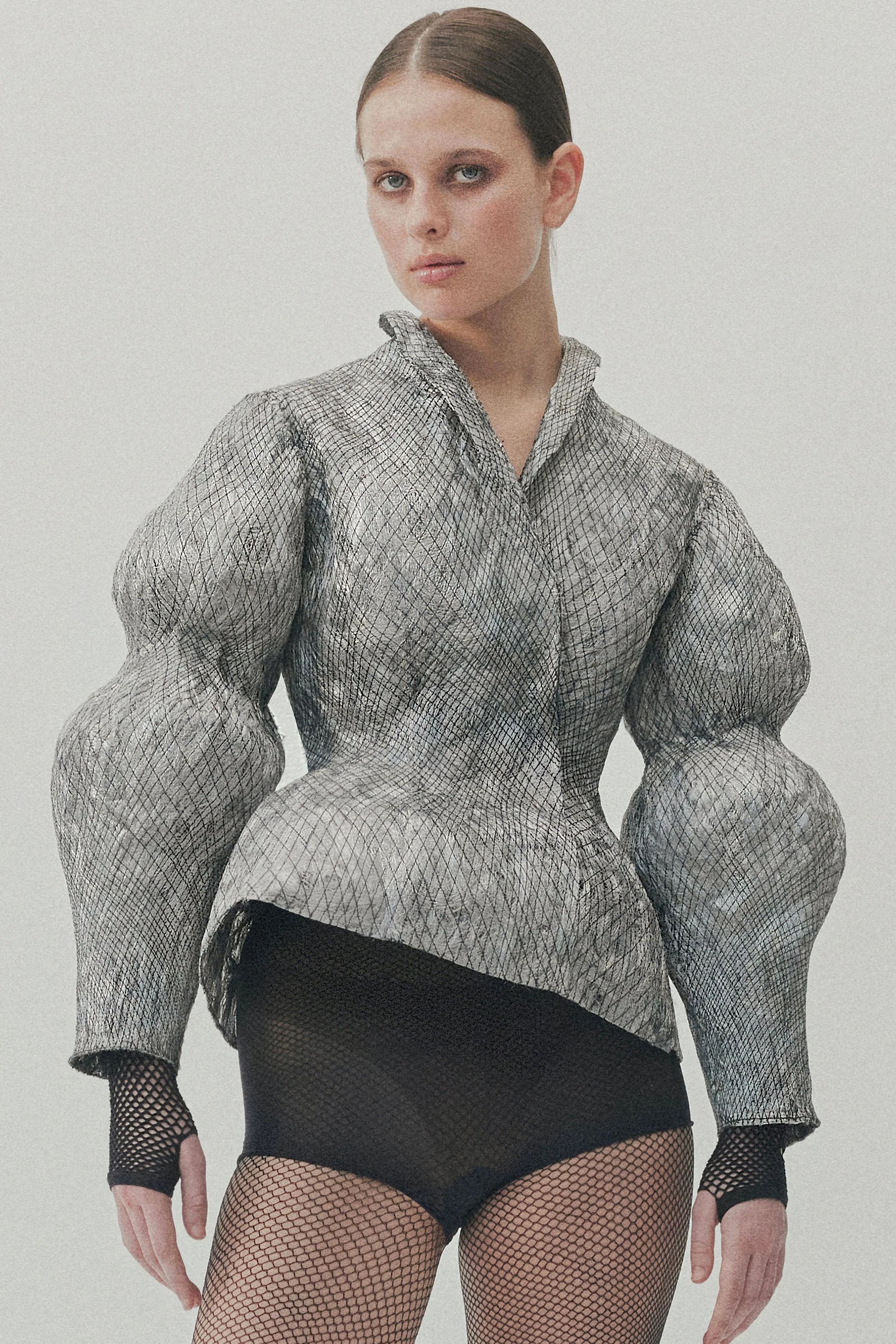
My graduate collection explores fashion heritage through the referencing of iconic designs from fashion history. In a time of unlimited access to online resources and AI technologies capable of generating content from the uncontrolled use of others' material, the work contributes to ongoing discussions about ownership, access, exclusivity, and hierarchies within fashion culture, shaped by institutions, consumers, and producers. The project centres on some of the most iconic fashion designs in history, which I studied through texts, images, and garment construction, seeking to capture their essence and significance through alternative methods of making.
Working on the collection has led me to question what the abundance of clothing, alongside the overwhelming flow of fashion imagery online, means for our ability to engage deeply with dress: the making of garments, their cultural origins, and their histories. The collection is not only about reimagining fashion's canon — it is also about cultivating an awareness of the past and viewing it as a mirror of the present. The use of pre-existing materials and textile waste from contemporary time is an essential part of this reflection, revaluing them through recontextualisation and textile craftsmanship.
Which materials, techniques, programmes and/or applications are you mostly interested in?
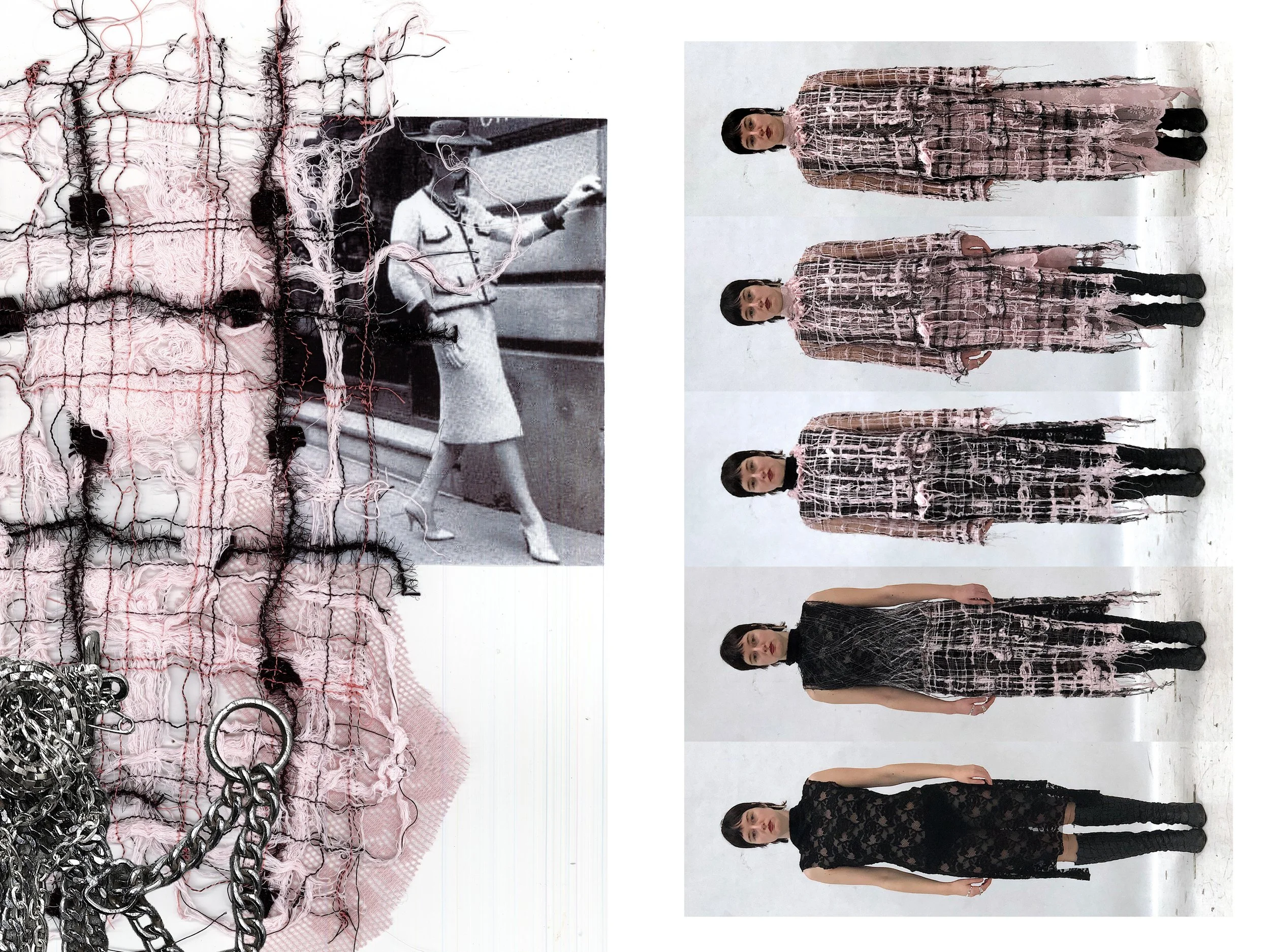
I am particularly interested in textile techniques that allow for a rethinking of form and garment construction. My master's degree project was based on a single textile technique, neither woven nor knitted. Related to embroidery and stitch work, it served as a tool for reimagining not only the technical conventions of structure and construction, but also for interrogating fashion's cultural meaning at the level of the thread.
The stitch is usually the smallest unit, being the invisible connection point between fabrics. My collection, Ensemble of Iconic Fragments, utilises the stitch in an all-seams construction method, in which it becomes a significant part of the visual expression, not merely a decorative element. Material and form are created simultaneously, and the all-over stitch both shapes and constitutes the textile.
Pre-existing materials invite a particular sensibility and care in order to add value and meaning. In my work, handcrafted textiles are correlated systematically with highly recognizable iconic references, proposing new perspectives on luxury and the fashion archive as a form of cultural knowledge, manifested in garments.
Photograph by Melissa Zabini
The exhibition you are a part of looks into the connection between animals, people, and place (flock, folk, field). What does this mean to you and how do you see it reflected in your work?
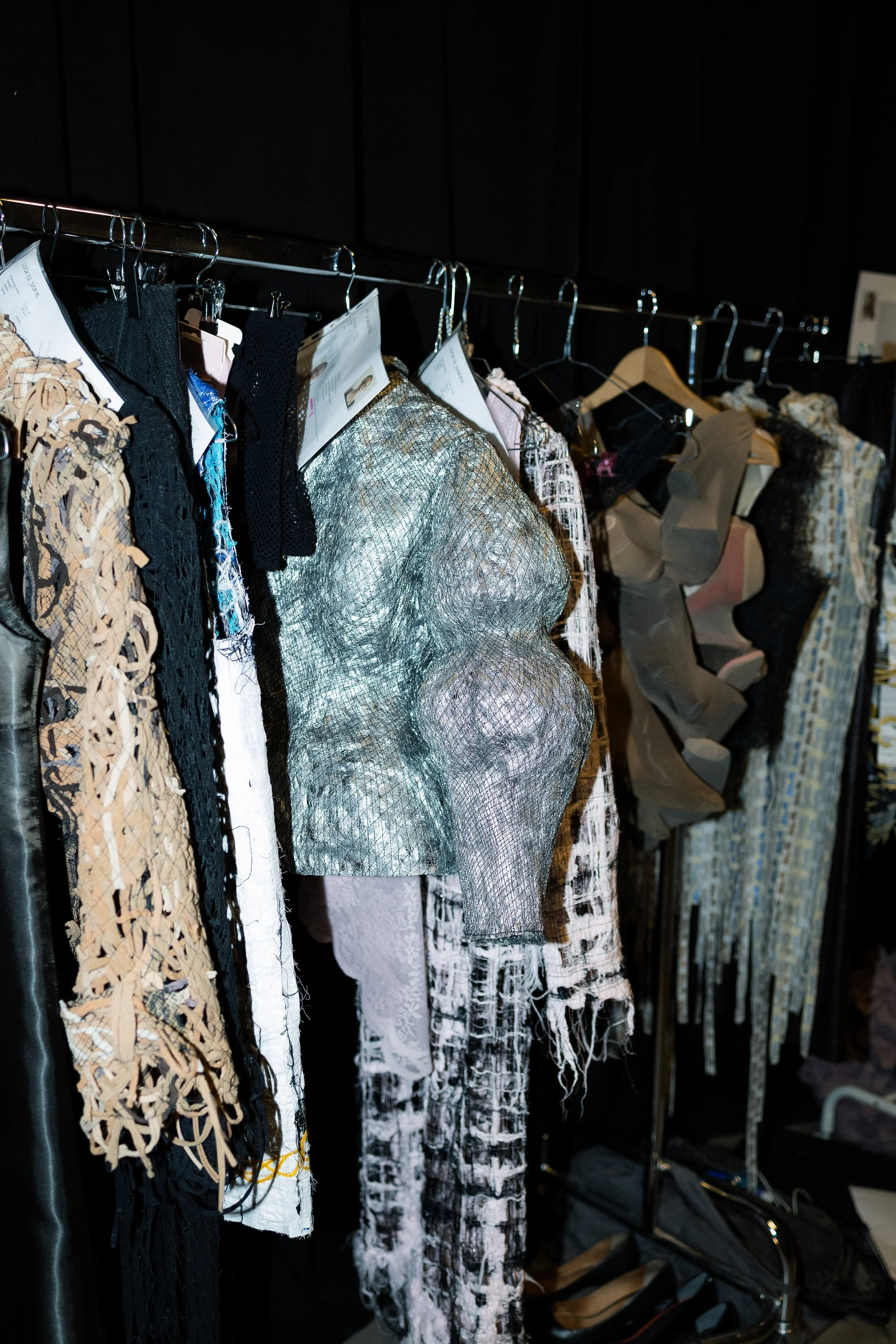
Ensemble of Iconic Fragments engages directly with the exhibition's themes of Folk and Field by understanding regeneration as both a material and a cultural process.
Folk speaks to the transmission of knowledge through making. Haute couture techniques, museum collections, and fashion history are often treated as markers of excellence through canonised designs. My master’s project approaches them differently: as materialised cultural knowledge that can be reinterpreted and re-curated through design. By reinterpreting iconic couture through contemporary textile processes, fashion heritage is understood as processual rather than static, manifesting that nothing can be created from nothing and that we always build on others' work and ideas.
Field speaks to the material basis of the collection - wool, cotton, nylon, and aluminium - sourced from deadstock and second-hand materials. Regeneration takes place in the making of the textile, simultaneously with the making of the garment. On a systemic level, it relates to responsible production, which, in this project, means not only recognising the potential beauty of discarded materials but also working with them in ways where scarcity, inherent material properties, and constraint drive creativity.
How do you perceive the meaning and importance of community within the fashion field? Community is a necessity for fashion to exist. I perceive the meaning of community as the creative teamwork and collaborations that allow ideas to grow into visions and visions to come to life. In my work, community transcends time, focusing on designers who preceded my own generation, who inspire and oppose each other, allowing me to reflect and develop my own perspectives anchored in our current reality.
Being part of the New Order of Fashion exhibition is a beautiful example of a community of talented and progressive fashion practitioners, each with their own distinct design language, showcasing diverse projects with regeneration as a shared core, which I am very grateful to be part of.
Sally Bjerre Gaarde Tweed Ensemble Process
How do you view the future of fashion? And your own role therein?
I have a strong belief in the value of craftmanship, authenticity and meaningful connections. As I am now entering the early years of my career, I hope to expand my technical knowledge, grow into different roles, meet new people, and gain experiences that will continue to shape me as a designer with all the responsibility that comes with this role. I want to carry with me the curiosity and critical approach that have shaped my practice so far, while remaining open to new methods, collaborations, and perspectives.