
Talent Talk: Julia Verberne
Dutch-Nicaraguan fashion designer Julia Verberne’s recovers memories, identity and belonging from garments and patterns inherited from her family. Reworking her grandmother’s wedding dress, blazer and blouse patterns across seven looks, Verberne embraces how memory shifts, transforms and carries traces of the past into the present.
Could you please introduce yourself?
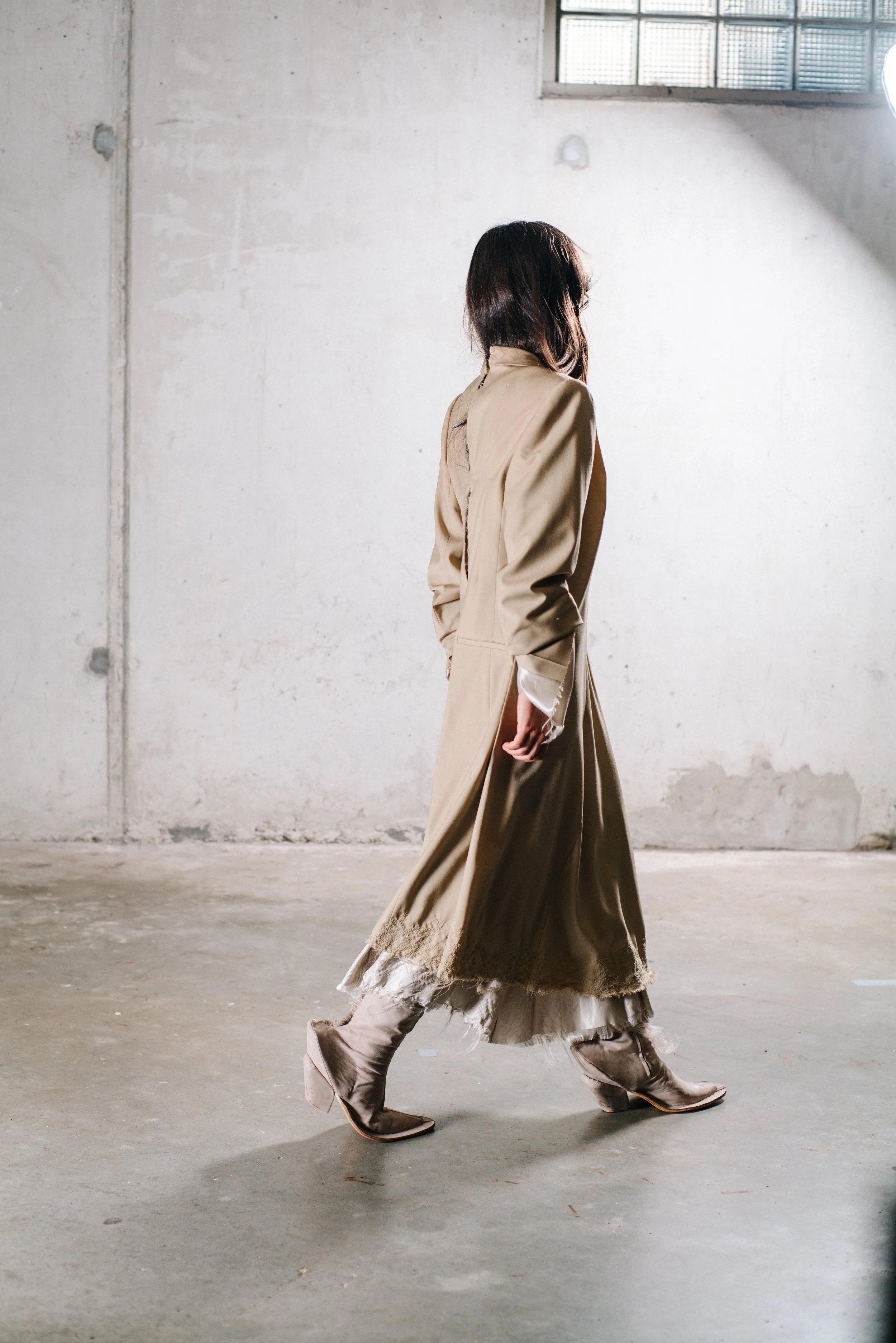
I'm Julia Verberne, 22 years old. A Dutch/Nicaraguan fashion designer based in Amsterdam. I graduated cum laude at Artez university of Arts, fashion design and my work is mostly about memory, identity, and belonging, using my own family history as material, quite literally, through pattern cutting.
Having graduated recently, how do you look back on your studies?
Good, honestly. I know once I commit to something I go all in, and that showed during my studies, especially working on my graduation collection. It taught me to trust an idea long enough to actually take it apart and rebuild it. Don’t be scared to trust yourself.
Could you please tell us something about your graduation collection/project?
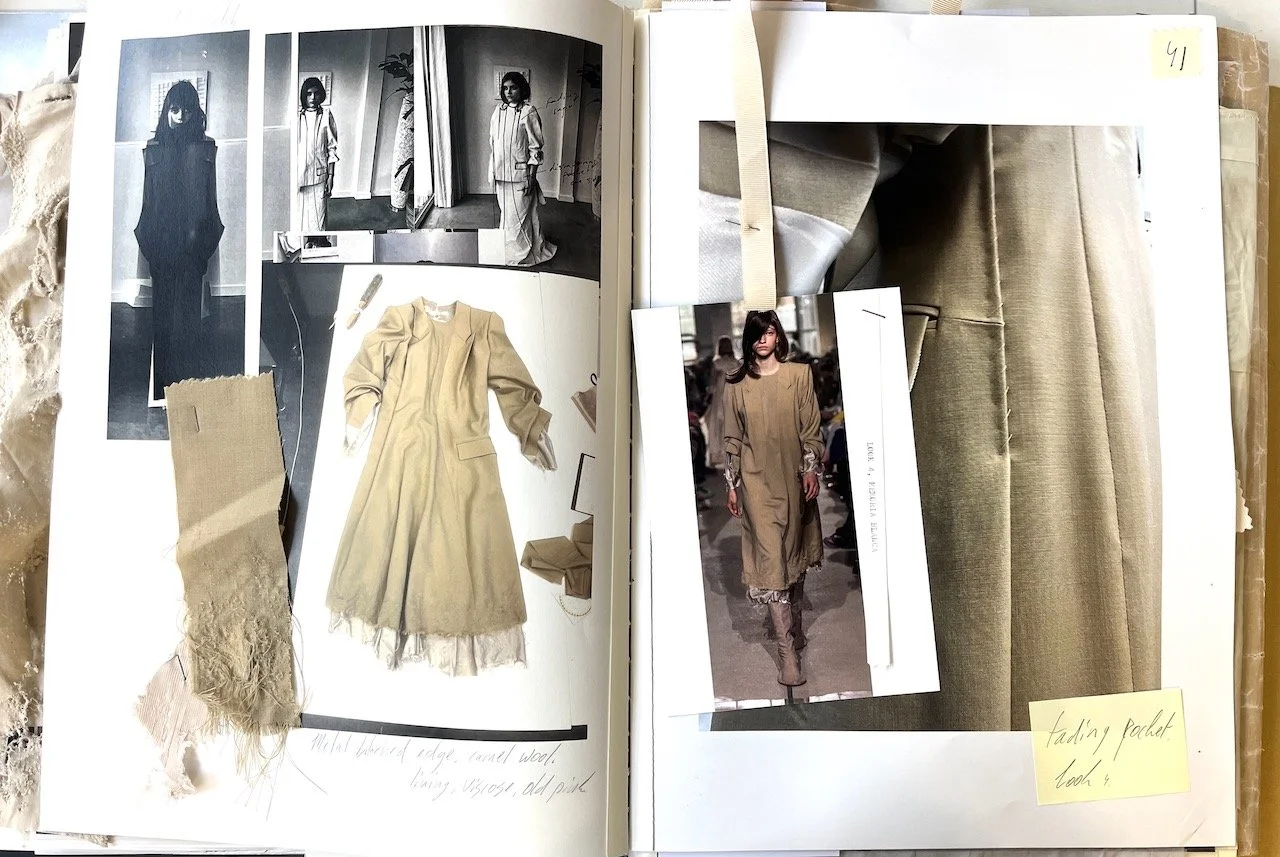
My graduation collection is called Memoria Blanca, "White Memory." It's about Nicaragua, the place I grew up going back and forth to, until I couldn't go back anymore. It became something I could only visit in my head.
The whole collection comes from one image: my grandmother's garden with my pink blouses on the washing line, moving in the wind. That warm, soft breeze is everywhere in this collection, not just as a feeling but as something I actually built into the garments. Pieces are cut to blow away from the body instead of sit still on it, edges are left loose on purpose, and parts shift from back to front, like the wind is moving straight through them.
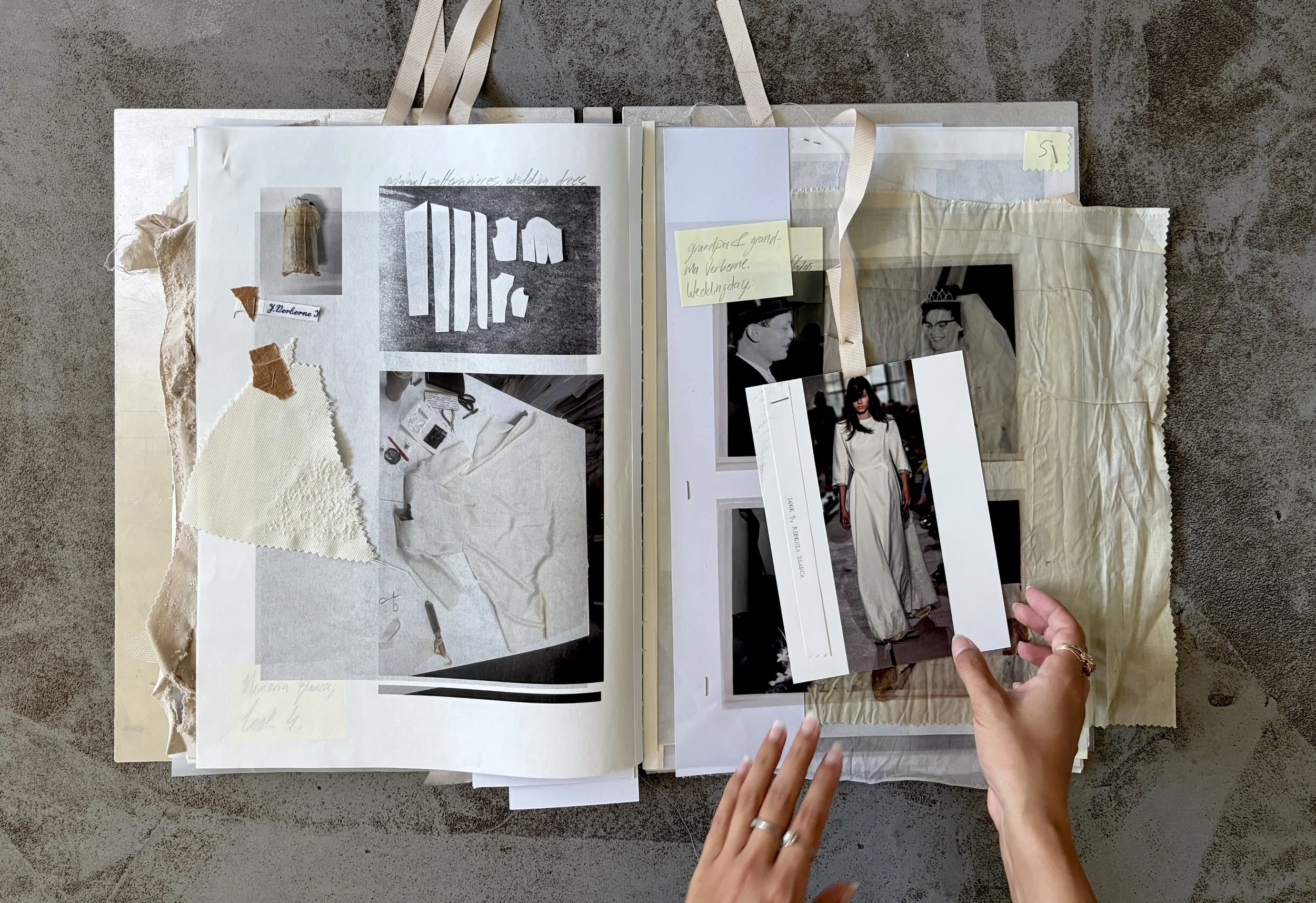
The whole collection is made from three base patterns that belonged to my grandmother: her wedding dress, a blazer, and a blouse. I reworked those same three patterns again and again across seven looks, cutting them on the bias, duplicating them, blending them into each other, letting them fall apart a little more each time, because that's how memory works too. You don't remember something the same way twice.
When my grandmother saw the finished dresses, she recognised her sister's hand in the seams I'd stitched. That was one of the best moments of the whole project for me, having her see that this wasn't just me reworking an old pattern, but something of her sister still being there, passed all the way through to what I'd made.
Which materials, techniques, programmes and/or applications are you mostly interested in?
I'm drawn to lightweight, moving fabrics, wool included, and to techniques that physically show time or change on the garment. In this collection that meant eco-printing (cooking flowers into fabric so only a trace stays behind), needle-punching and metal-brushing to fray and roughen edges, and a paper coating on bamboo jersey so the fabric starts to resemble the old patterns themselves. Most of it is hand-stitched.
What does Flock, Folk, Field mean to you, and how do you see it reflected in your work?
Folk is the one closest to what I do, reworking my grandmother's patterns, again and again, is a form of craft that's really about keeping something going even as it changes shape. Field and Flock come in more through material, wool especially carries its own history, an animal, land, hands that worked it, before I ever touch it. I'm just adding another layer of memory on top of that.
How do you perceive the meaning and importance of community within the fashion field?
For me, community in fashion is about who you learn from and who you make things with, not just who you show to. It's staying curious about the people and skills around you, working with your hands alongside others instead of always working alone and faster. I think that's where real knowledge actually gets passed on, the same way my grandmother's patterns were passed down to me. If we slow down as a field, we make more room for that kind of exchange again, learning a skill from someone, being inspired by what's already around you, instead of every designer just chasing the next thing on their own.
How do you view the future of fashion, and your own role in it?
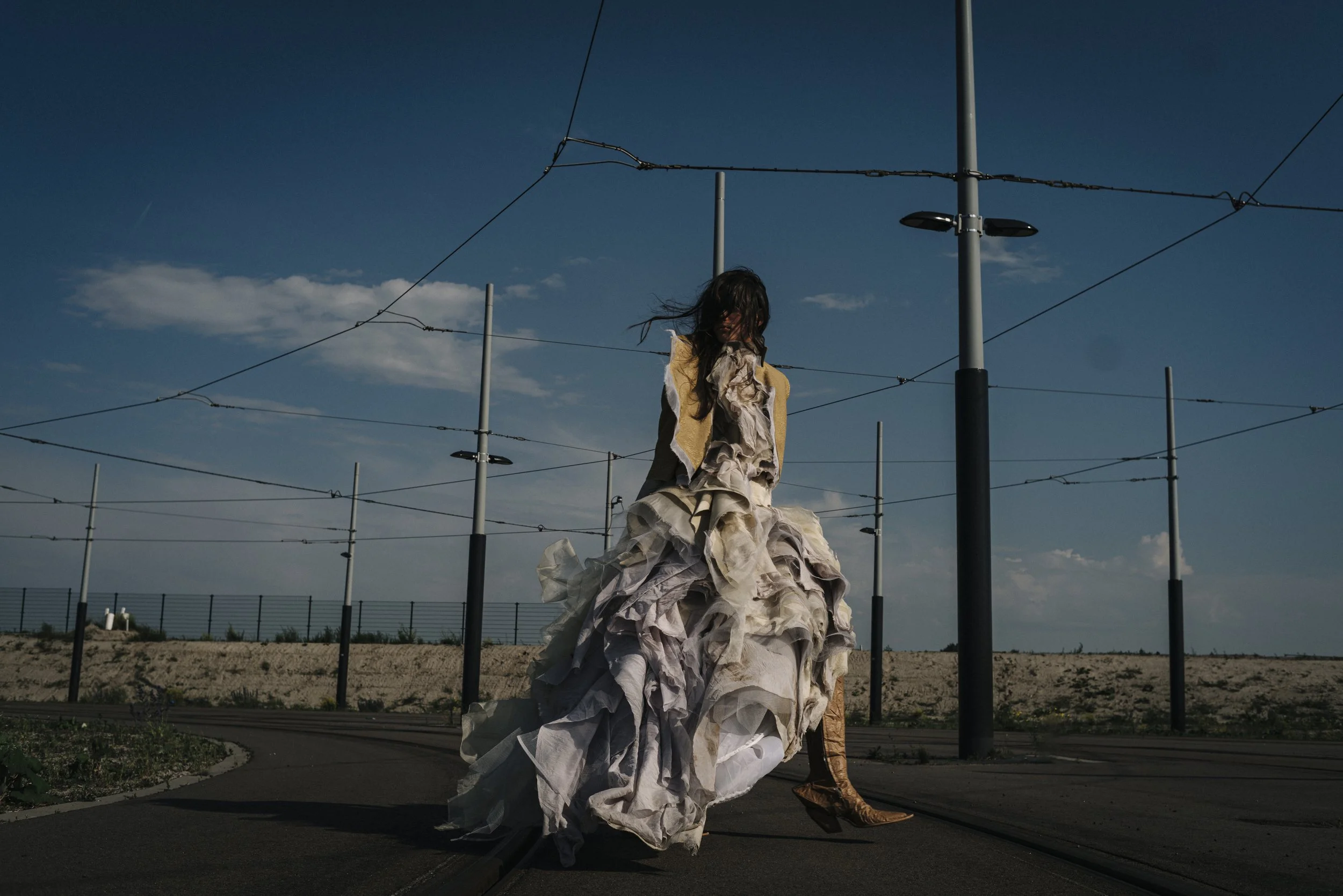
I'd love to see the future of fashion move away from always wanting the next new thing, and more towards garments you actually keep. Something you wear for years, then give to someone else, and they keep wearing it and maybe pass it on again after that, so the garment ends up living a whole life of its own, longer than any one person's use of it. That's the role I want to play as a designer, making things that are worth holding onto and passing forward, not replacing.