
Talent Talk: Hedestrik
Rooted in the heather-covered landscapes of western Jutland, Hedestrik, a Copenhagen-based association explores raw wool through collective felting and hands-on workshops. Founded by Maja Høy and Liva Steuk Hansen to bring together a growing community around traditional wool craftsmanship, celebrating the diversity of local sheep breeds and championing a more conscious approachto textiles.
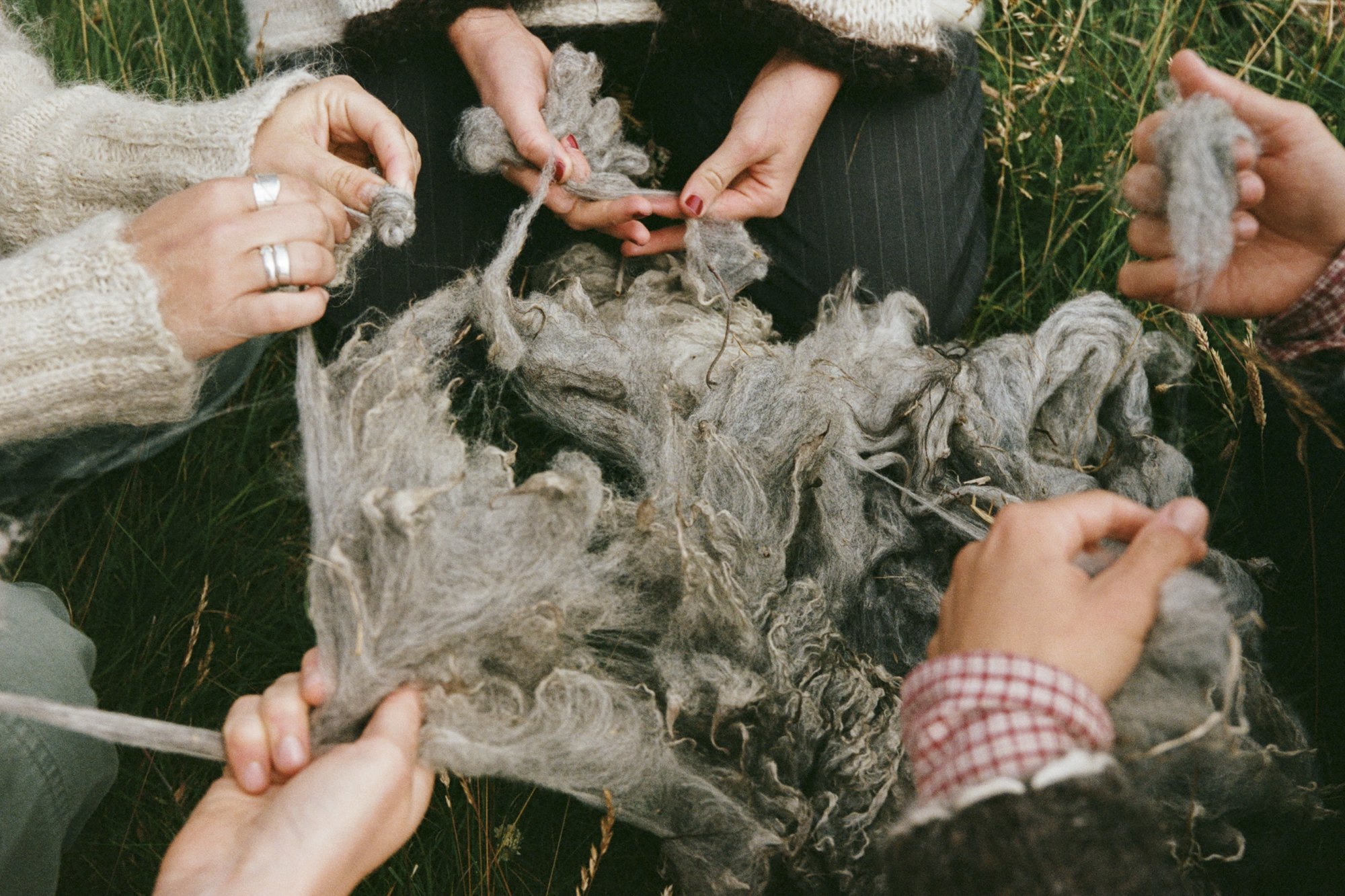
Photography by Iris Humm
Could you please introduce yourself?
We are Maja Høy and Liva Steuk Hansen. We founded Hedestrik, an association based in Copenhagen. Over the years, it has grown, and Luna Rose Helms, Mateo Marain, Clara Ravnkilde, and Mathilde Ozemec have joined the team, each working in different roles to promote Hedestrik’s vision and mission.
Maja previously taught students how to sail traditional wooden tall ships, while Liva has a background in farming. We are both passionate about craftsmanship, although our backgrounds lie outside the field of design.
Could you please tell us about how you started your brand?
Hedestrik began as an idea in the heather-covered landscapes of western Jutland. Liva was working as a shepherding trainee at Lystbækgård when she fell in love with wool, sheep, and the connection between landscapes, animals, and humans — a relationship that has shaped our cultural heritage for generations.
The first technique we explored was dogmeknittning, a technique for knitting with raw, unspun wool. This is also where our name comes from: Hedestrik translates directly as “heather knit.”
We then started the Hedestrik Instagram account to share our work and began teaching dogmeknittning workshops across the country. After a year of teaching in various places, we decided to open our own shop and workspace, which also serves as a venue for workshops, in Nørrebro, Copenhagen.
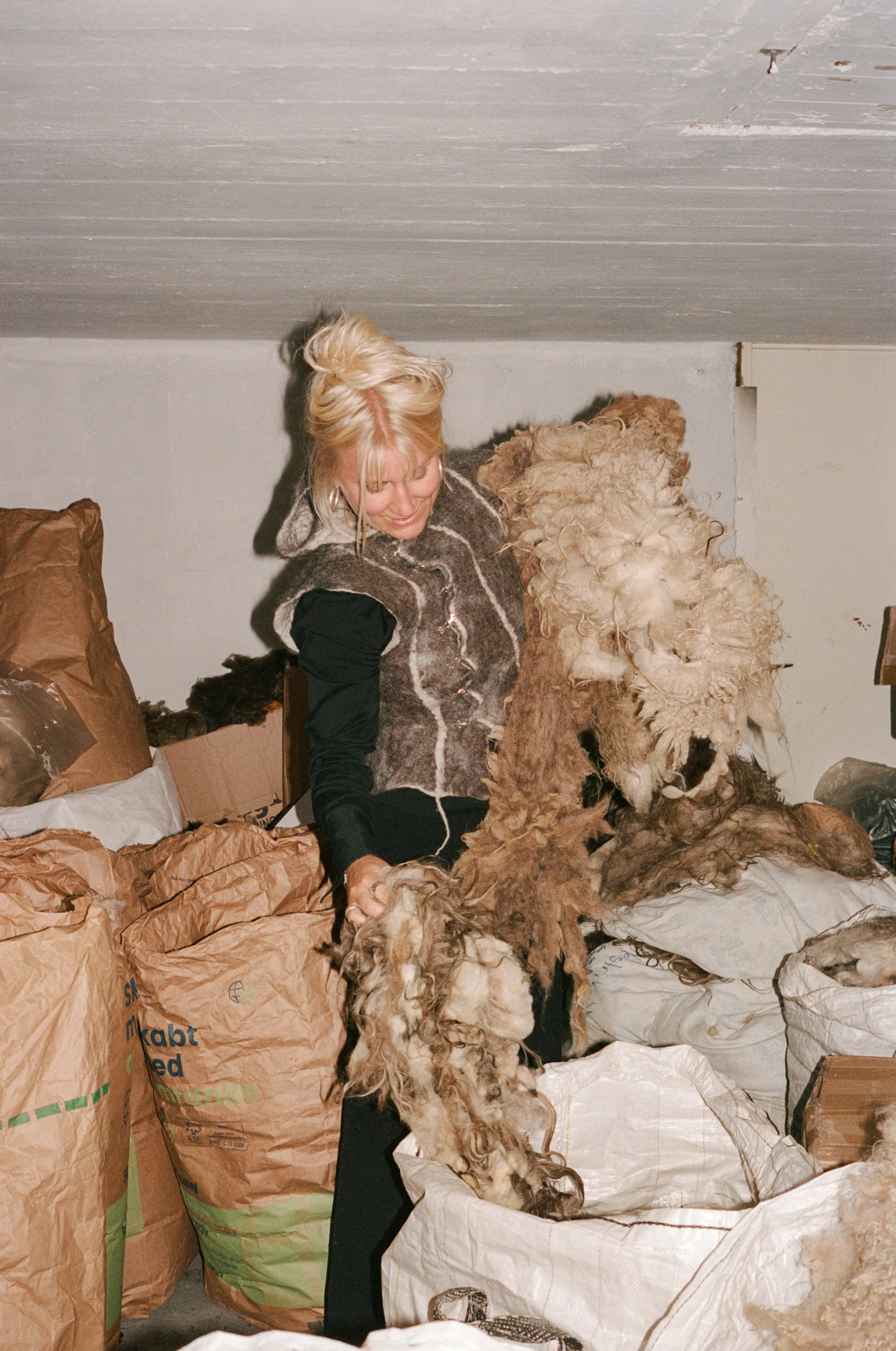
Photography by Eva Donckers
You work alot with knitting, wet felting and wool. Can you tell us how you became interested in this material and these techniques?
After working with sheep at Lystbækgård, Liva realised how much wool went unused and learned a variety of techniques for working with raw wool. This became the core idea behind our association: how can we make use of local wool in a way that allows as many people as possible to engage with the raw material and create things of their own?
It all started with dogme knitting using wool from the Spælsau sheep breed. Before long, people began contacting us with wool from other sheep breeds, which led us to explore felting. Different sheep breeds produce very different types of wool. Some are well suited to dogme knitting, while others are better for felting. Felting has opened up possibilities for creating things that would not be possible through knitting alone, and we love being able to combine the two techniques and work with both.
Wool is at the heart of everything we do. We source wool from different farmers and develop our work and designs around the material we receive. We try to work with a wide variety of sheep breeds from across the country, although, of course, we have our favourites that we keep coming back to.
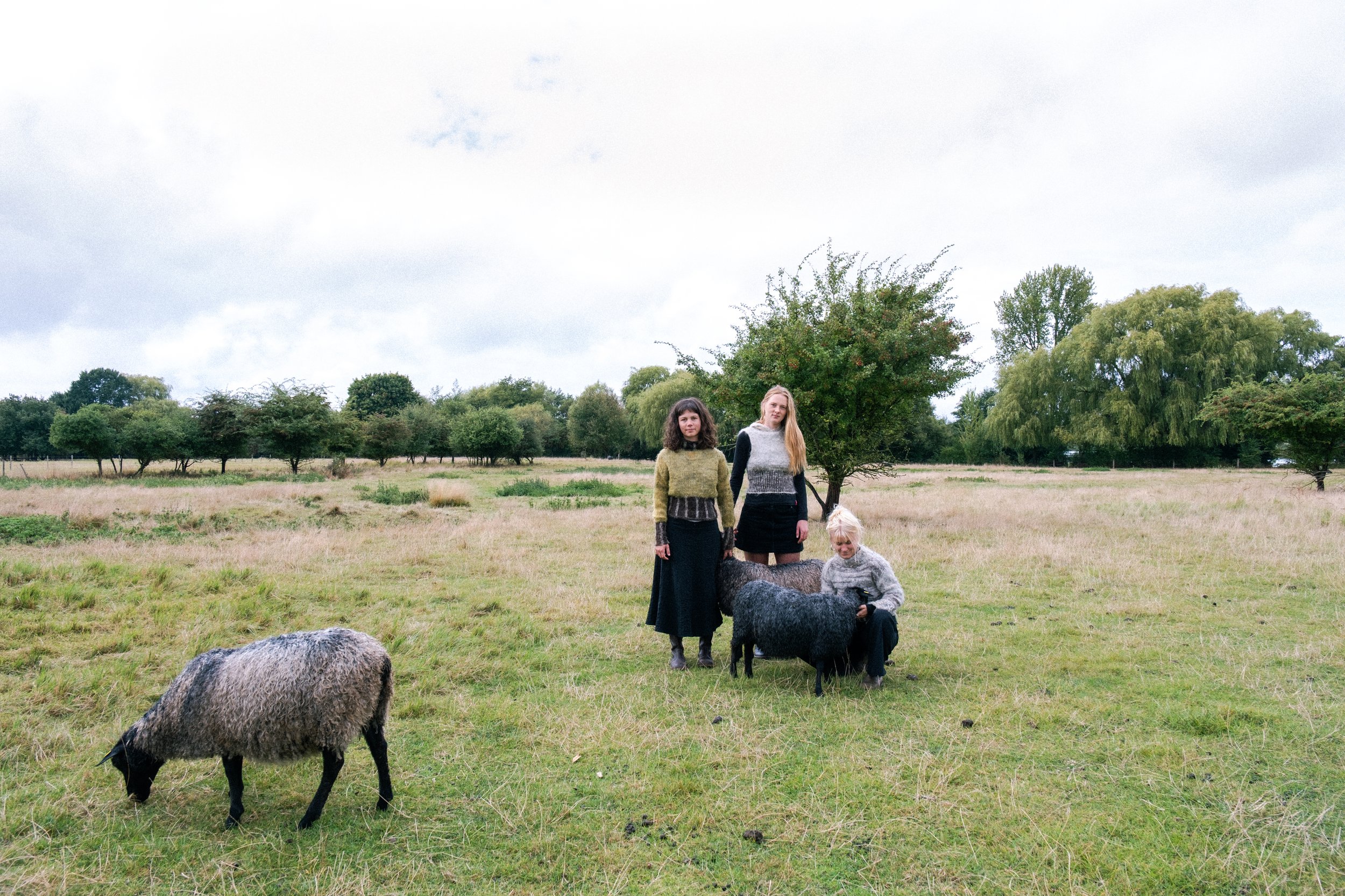
Photography by Eva Donckers
The exhibition you are a part of looks into the connect between animals, people, and place (flock, folk, field). What does this mean to you and how do you see it refelcted in your work?
In Denmark, as in many other countries, we have what I would almost describe as textile landscapes — landscapes shaped by sheep. Today, sheep in Denmark are primarily raised for meat production, as they have been in the past. However, historically, wool would have been one of the main reasons for keeping sheep.
Through our work with wool, we aim to bring the focus back to landscapes as the roots of textiles. We cannot separate the two. Flock, folk, and field are interconnected and continually shape one another. This is why we believe it is so important to take a conscious stance on the materials we use, as they have a profound impact on landscapes and local communities.
How do you perceive the meaning and importance of community within the fashion field?
In Denmark, textile work has always been closely connected to community. In the past, people would gather to help one another with the long and demanding process of preparing wool. Working with wool is still a lengthy and labour-intensive process, so inviting people to come together and work on their own projects felt like a natural choice for us.
One of the most important parts of our work is raising awareness of how little wool is actually being used today. We believe that inviting people to work with wool themselves is one of the best ways to help them discover what an amazing material it is and how much can be achieved using simple techniques.
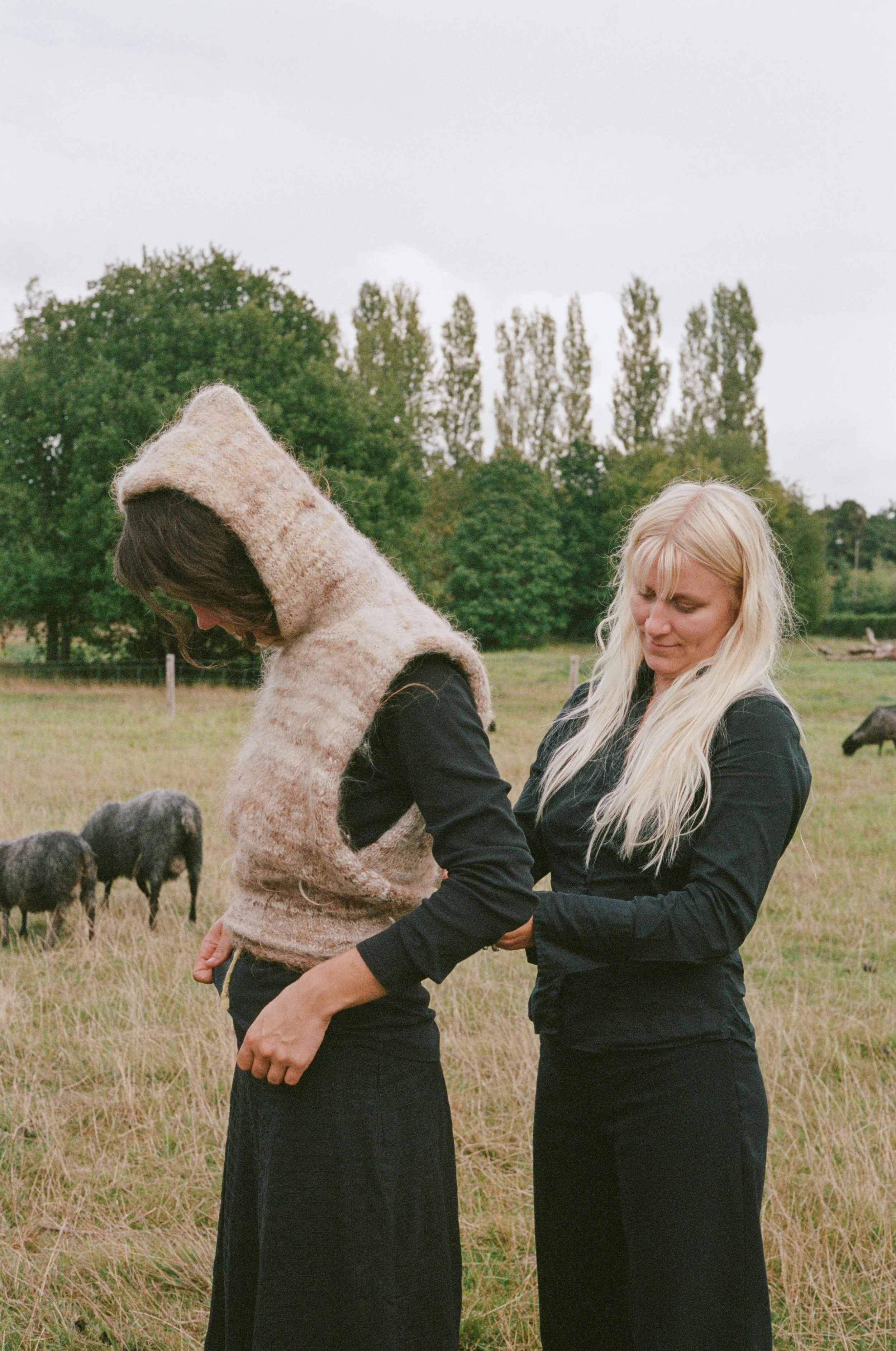
Photography by Eva Donckers
What are some discoveries that you have made during working with raw wool and how would you like to apply it to fashion in the future?
One of our most important discoveries has been the differences between types of wool, and how these differences are influenced by how the sheep are raised and their wool is cared for. When we first started our work, very little information was available about the different types of wool in Denmark, so we had to experiment with many different varieties ourselves.
Another important realisation is that making woollen garments by hand is difficult to do alone. By teaching traditional crafts, we bring people together and invite them to become part of a shared movement towards using local materials.