
Talent Talk: Dakota Burpee
Dakota Burpee is a textile and fashion designer whose practice weaves a relationship between body, garment, and landscape. Their work reimagines wool as more than a textile, revealing it as a living connection between animal, maker, and place.
Could you please introduce yourself?
I am Dakota Burpee, a material-based textile artist living in Cumberland, BC, on Canada’s West Coast. I recently completed my graduate studies at Emily Carr University of Art and Design and have been a weaver for 10 years. Weaving and creating the textiles for my garments are central to my work.
My research investigates the fibre I work with, integrating a perspective that acknowledges fibre contains energy, life, and animacy. Interested in transformation, I observe how the material shifts shape across forms in a cycle of continual becoming. We, too, are perpetually becoming. This collection comprises handspun, woven garments that symbolize transformative, unifying human experiences and highlight the animacy of fibre.
Having graduated recently, how do you look back on your studies?
Looking back, the last two years of my MFA program deepened my relationship to my making practice. I now approach making with a method that puts the material at the forefront, acknowledging the aliveness within that remains in the fibre in every form it becomes.
These last two years were also filled with connection. I am so grateful for all the conversations, inspiration, wonderful people and passion I have received and felt from my fellow classmates and faculty. The opportunity to connect has been one of the most special aspects of the program.
Could you please tell us something about your graduation collection/project?
My graduate thesis collection of garments responds to the connective tissue of the wider cosmos of the universe and the experience of being human.
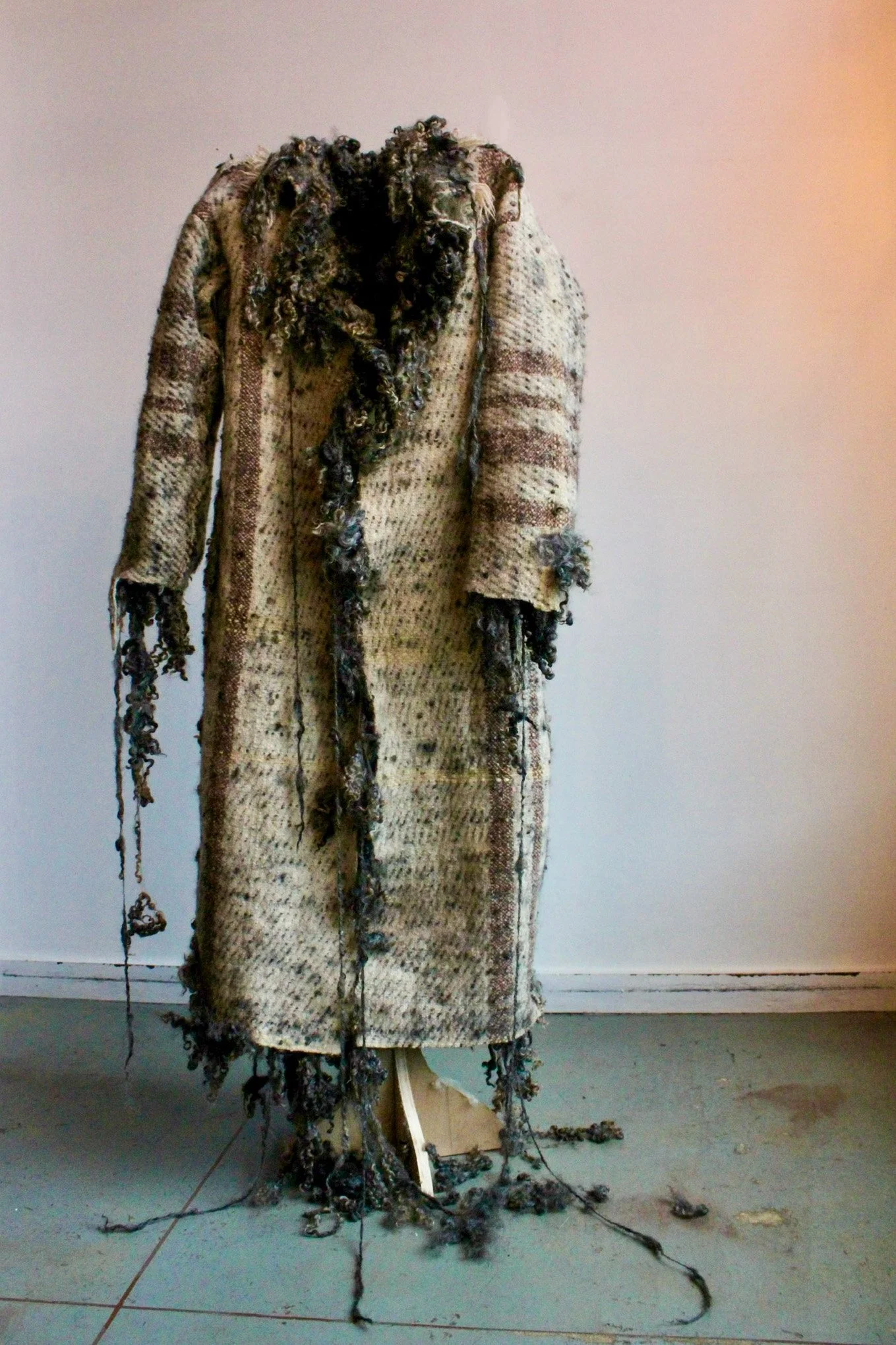
Wool is at the heart of this collection. The material shapes the process, design, construction, and woven structure of each piece. These pieces explore the animacy of fibre and reference shared human experiences of transformation, decay, growth, and emergence, experiences we encounter many times throughout our lives. Each piece depicts a different expression of these life cycles.
Bubbling, wispy fibres dance with spun and woven forms. Some fibres float, delicately, or are drawn to spiral into spun thread; others remain determined in their state, refusing to be pulled into the grid of woven cloth. These uncontained, shape-shifting garments that comprise my collection merge the internal and the external, creating a boundary space between them.
My piece Pocket Stones has an exterior encasement like skin, protecting the spilling of the internal. Becoming is connective tissue in both human and non human forms.
Which materials, techniques, programmes and/or applications are you mostly interested in?
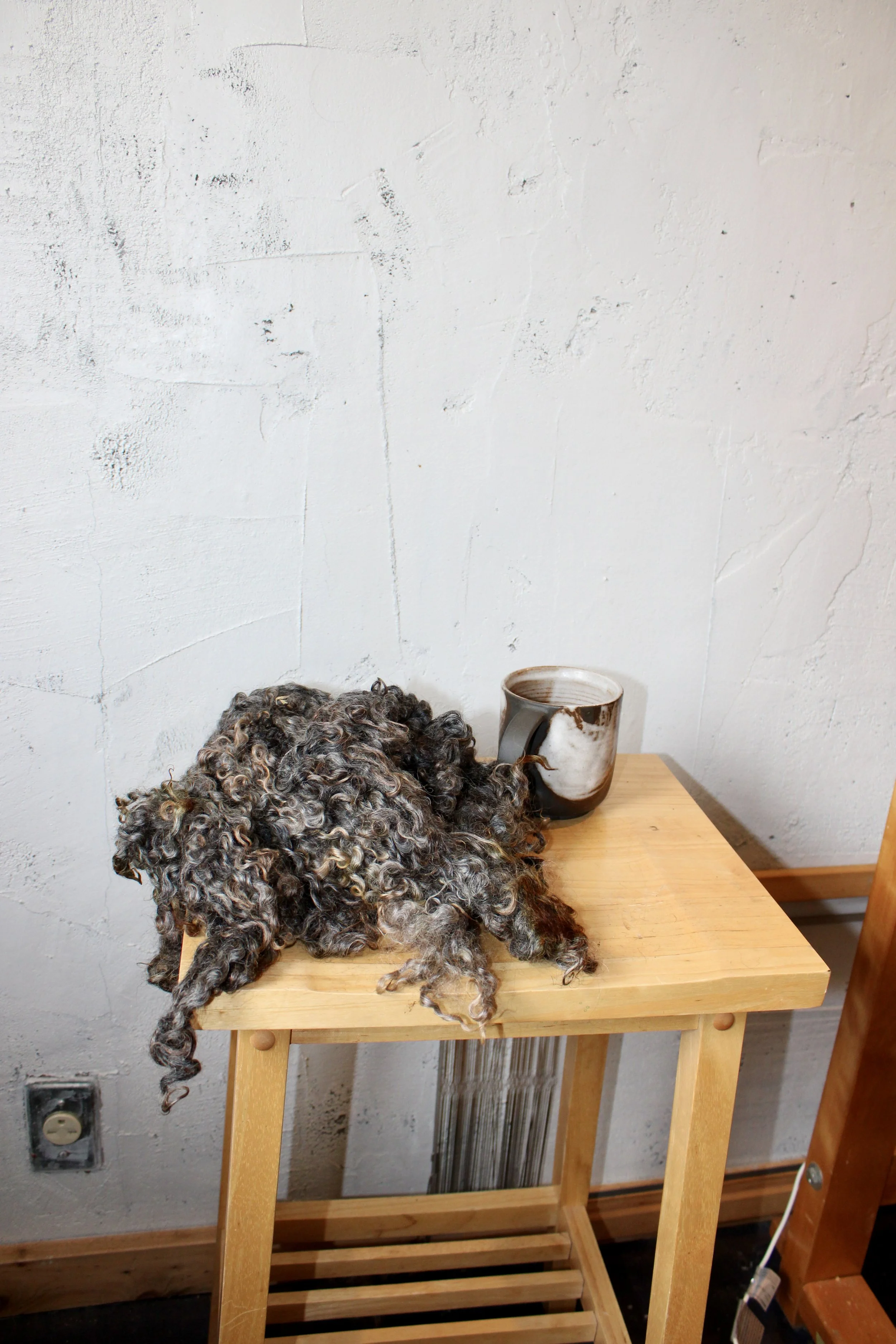
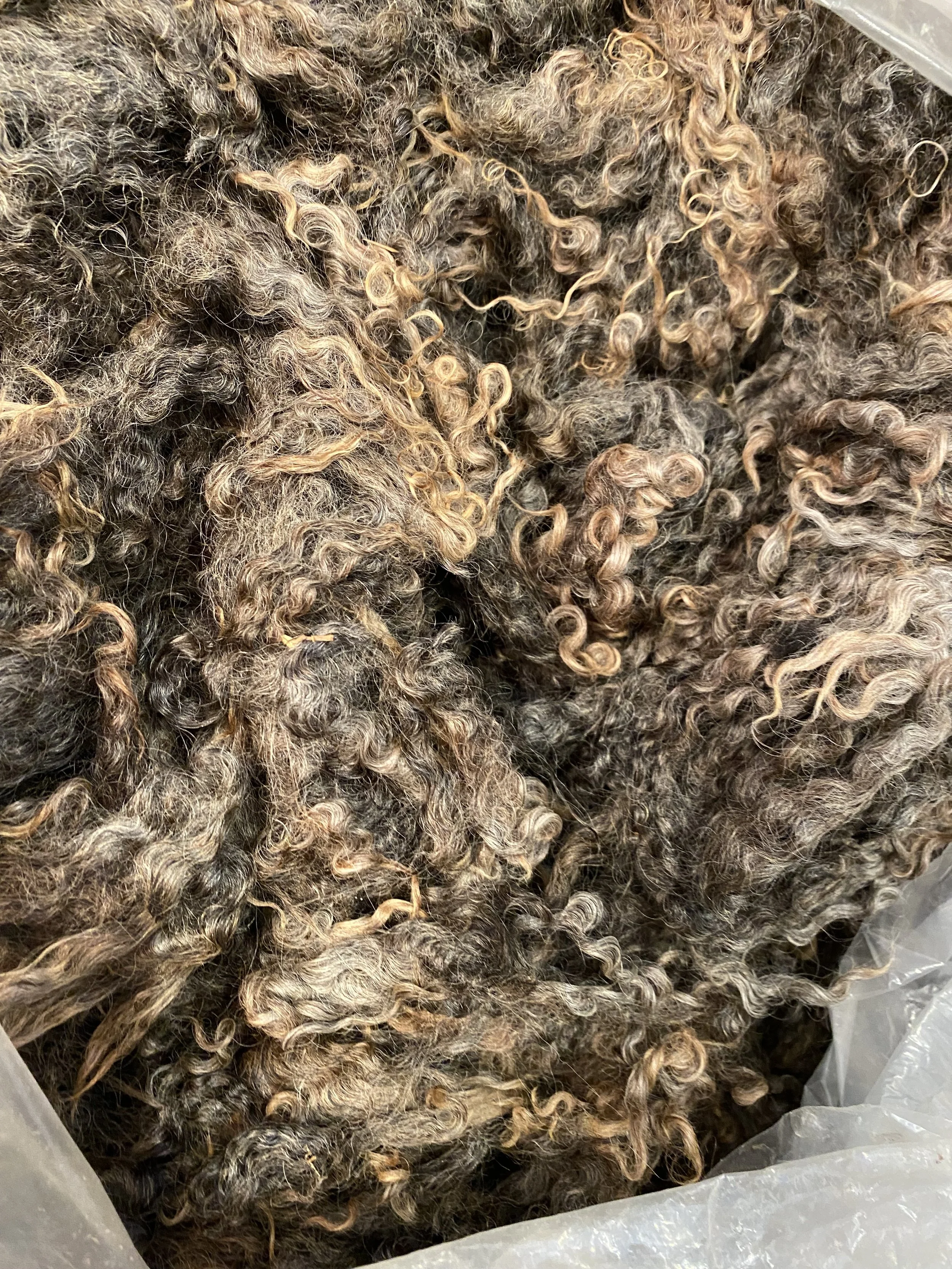
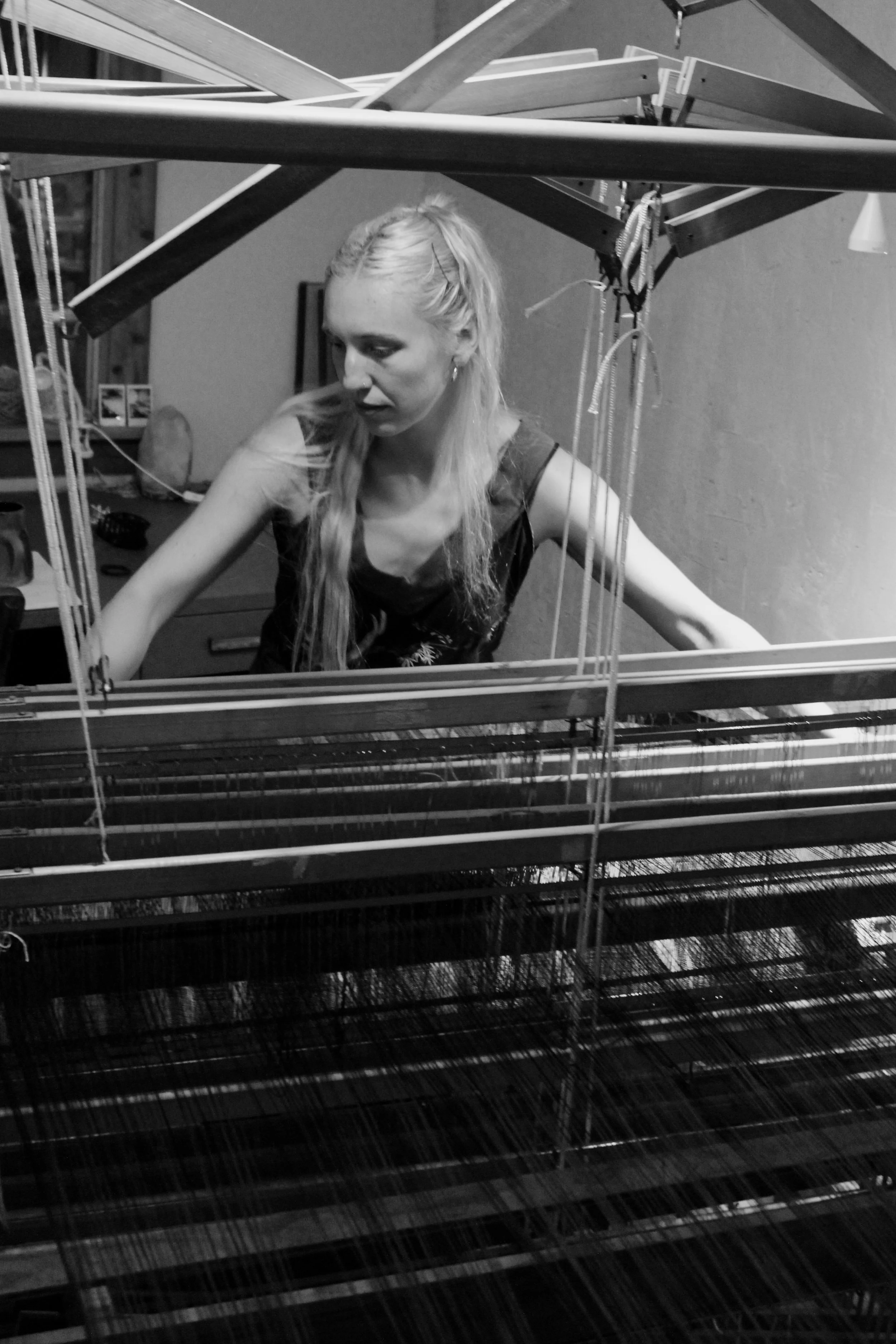
My process is hands on and responsive. I receive wool from a local farmer nearby my house. Each garment is made from handspun fibre that I care for from the moment it arrives, fresh from the animal. I wash, dry, and comb the wool before spinning it into yarn. I weave it into yardage on my wooden floor loom. I use a pedal-operated spinning wheel to spin fibre into yarn. Spinning is a response to the fibre, an opening in time to react to what the fibre communicates. I allow the tactile qualities to move through my hands and into the spun yarn.
I weave the yarn into yardage on my 8-harness wooden floor loom, favouring woven structures that result in the handspun fibres at the surface of the cloth. . Finally, I sew the cloth into garment forms. The process embraces imperfection, shifting some of the control from my hands to the fibre.
Lately I have been felting wool in my backyard, and I am interested in the many forms the wool can take through that process.
The exhibition you are a part of looks into the connect between animals, people, and place (flock, folk, field). What does this mean to you and how do you see it refelcted in your work?
Flock, Folk and Field speaks to relationships: with non-human beings, with each other and with the earth. The theme is circular and asks fashion to consider its role in the world and how it interacts with its surroundings.
My connection with the fibre I use also extends to the local farmers I source fibre from. I go to the land the sheep live on, see their life there, their surroundings and this relationship with farmer and land connects me more deeply to the fibre. This shows up in my work in how I think of the fibres I use as living, animate beings. This challenges a human-centric perspective and opens up deeper respect for our surroundings. The circular connection lives in the material and my garment forms as well. As the fibre spills from them, they exist in states of undoing or becoming, either returning to earth or evolving into something else. In referencing these cyclical patterns, I connect to the relational heart of Flock, Folk, Field.
How do you perceive the meaning and importance of community within the fashion field?
Community is connective. It is about relationships. These relationships are important. They connect us to one another; makers, producers, farmers, growers, artists and designers. We need community for the future of fashion to exist. In a world where individuality persists with digital consumption, forming community is ever more important. Thinking of fashion as community highlights relationship and connection to one another.
Community has been central to my own practice. Recently, I organized a Wearable Art Fashion Show with friends and community members, bringing together 18 designers from our small town and nearby areas. Seeing so many makers share their work, and seeing the pieces come alive on the wearers, showed me how much creativity a community holds when people gather around shared values. Running my used clothing shop in Cumberland has taught me something similar: as clothing passes between hands and lives, it becomes a thread of community, connecting us to one another. During my MFA, being part of shows like the Slow Fashion Lab introduced me to other makers and people thinking about fashion in slower, more thoughtful ways. I believe community is essential for the future of fashion, because a more thoughtful and caring fashion field can only grow from people who know and support one another.
How do you view the future of fashion? And your own role therein?
I hope the future of fashion embodies slowness. I hope it is more attentive to where our clothing and materials come from. I believe it must be community-minded, one that includes relationships with nonhuman beings, one another, and the earth. In my practice, I see fibre as alive, an active contributor to the process, with the power to shape the direction of a piece. As a result, I know and understand fibre more deeply. If the future of fashion embraces this kind of perspective, we might come to observe the world through a different lens, one that recognizes aliveness beyond the human and, with that, the gravity of our actions that don’t consider our surroundings. I feel the importance of creating spaces and opportunities for makers/designers/ artists to connect, and I hope to continue cultivating these spaces where and when I can.