
Talent Talk: Barbora Necpalová
Barbora Necpalová practice explores the intersection of fashion, art and cinema, using clothing to create worlds, stories and characters. Drawing from her Slavic background, personal experiences and cultural references, her work explores the absurdities and contradictions of contemporary life.
Photography by Dorota Kolároá
Could you please introduce yourself?
I’m Barbora Necpalová, a conceptual fashion designer currently based in London, recently graduated from Amsterdam Fashion Institute (AMFI), specialising in tailoring and textiles. I am here to blur the lines between art and fashion, creating worlds, stories, and characters through clothing, with concept always as the starting point.
Having graduated recently, how do you look back on your studies?
Looking back on my studies, I have quite mixed feelings. I’m really happy to have finished and to now be able to focus more on my own projects and direction, but at the same time, I definitely miss being in that creative bubble and being surrounded by the same people every day. I learned a lot throughout the years and developed my own design language, while becoming much clearer about what I want to keep exploring in my work, and what I don’t.
I also really appreciated having access to the machinery and facilities, especially in the MakersLab. Being able to experiment with different processes and techniques deepened my understanding of what is possible and opened up new ways of approaching my work.
Photography by Dorota Kolároá
Could you please tell us something about your graduation collection/project?
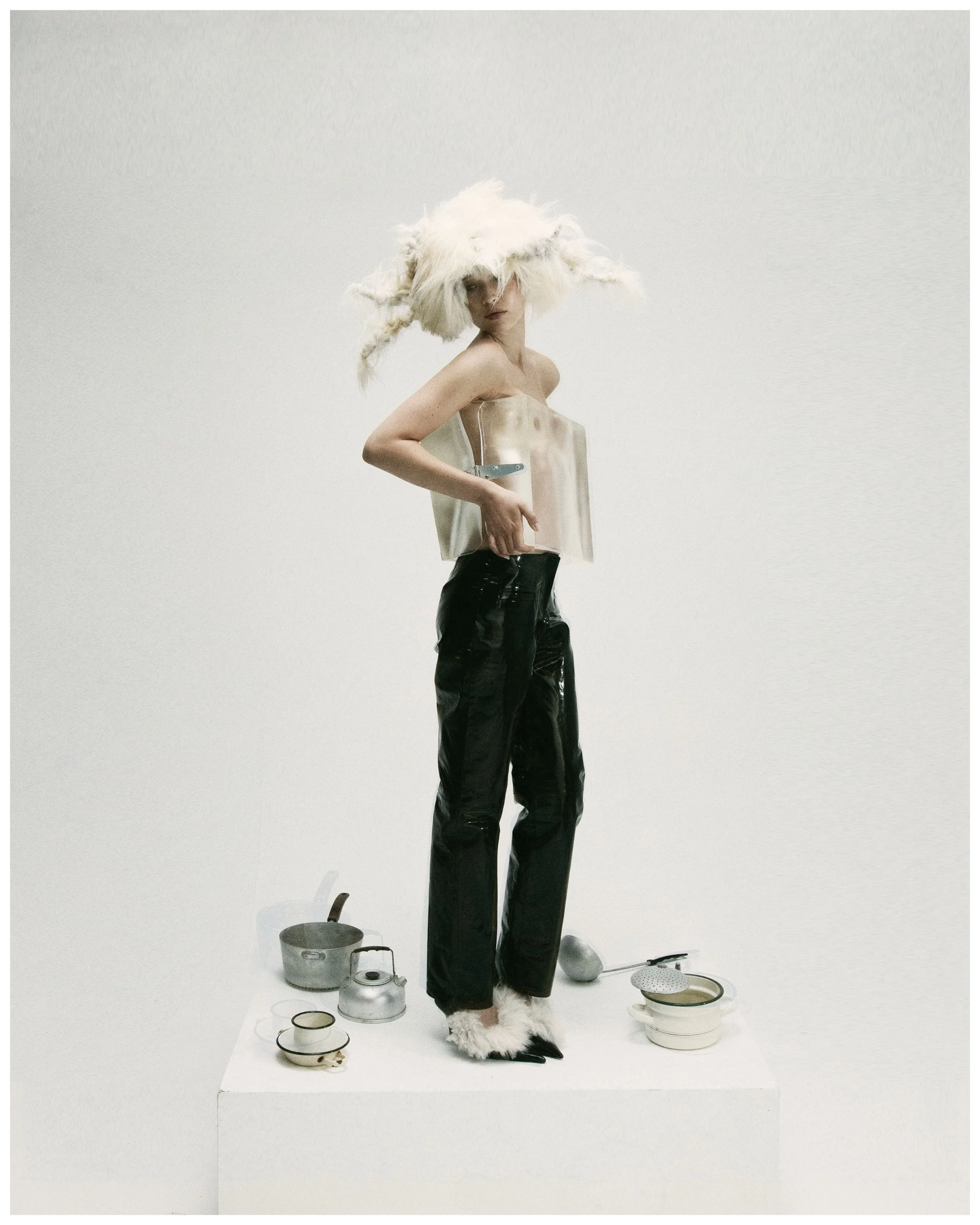
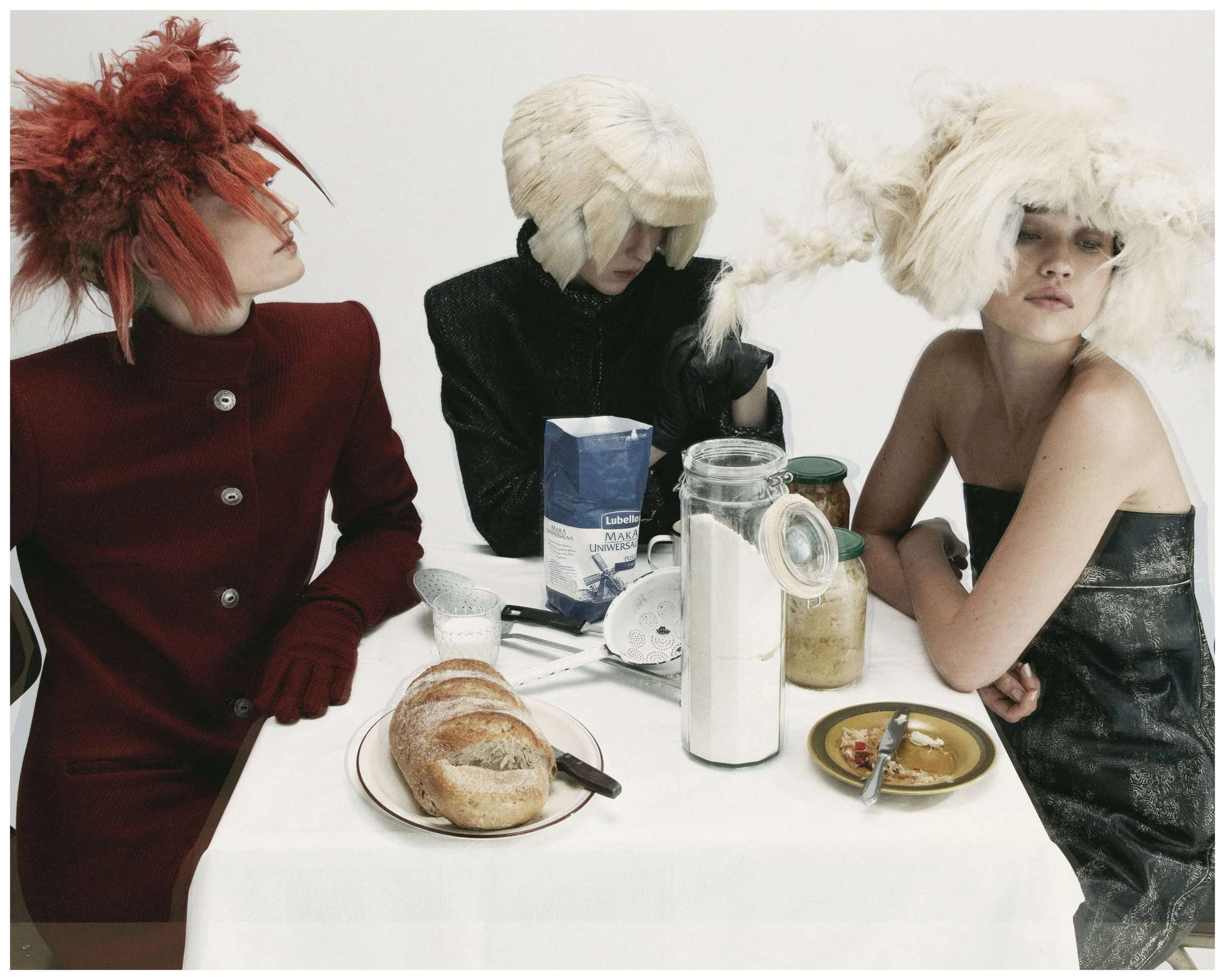
My graduation collection, I Season With Ants, explores the absurdity of today’s world, where small everyday worries exist alongside real danger, and dysfunction in power structures can start to feel normal.
Coming from a Slavic, Soviet-influenced environment, I took the Soviet kitchen as my main point of departure. I was interested in its atmosphere, objects, clothing and colours, but also in what the kitchen represented, a private space where everyday life continued despite everything happening outside. Repetition, inherited objects and contradictions became important parts of the collection, reflecting a system that can feel both inescapable and completely illogical. We are just like little ants in a system we can’t control, and in this kitchen, I still season with ants.
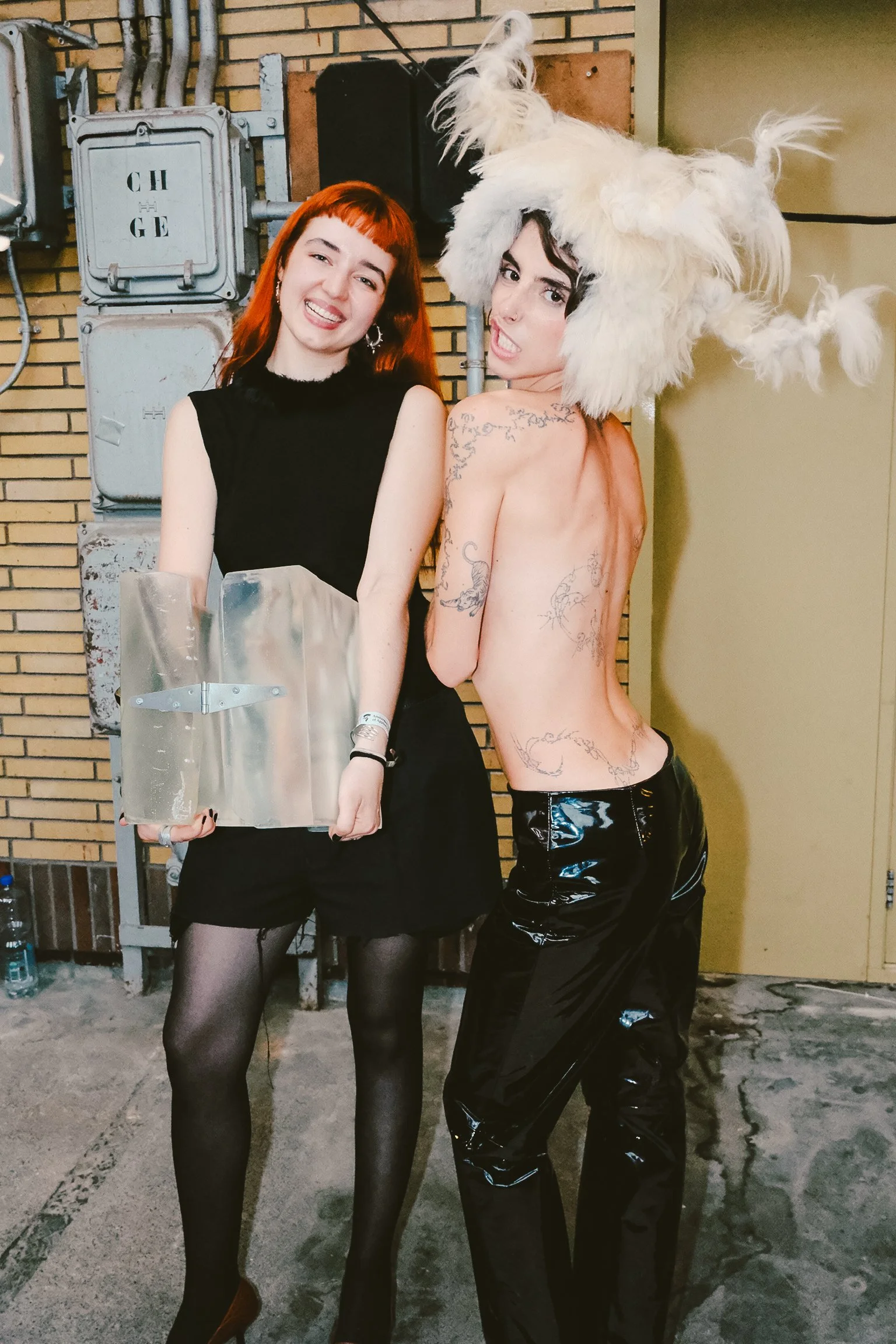
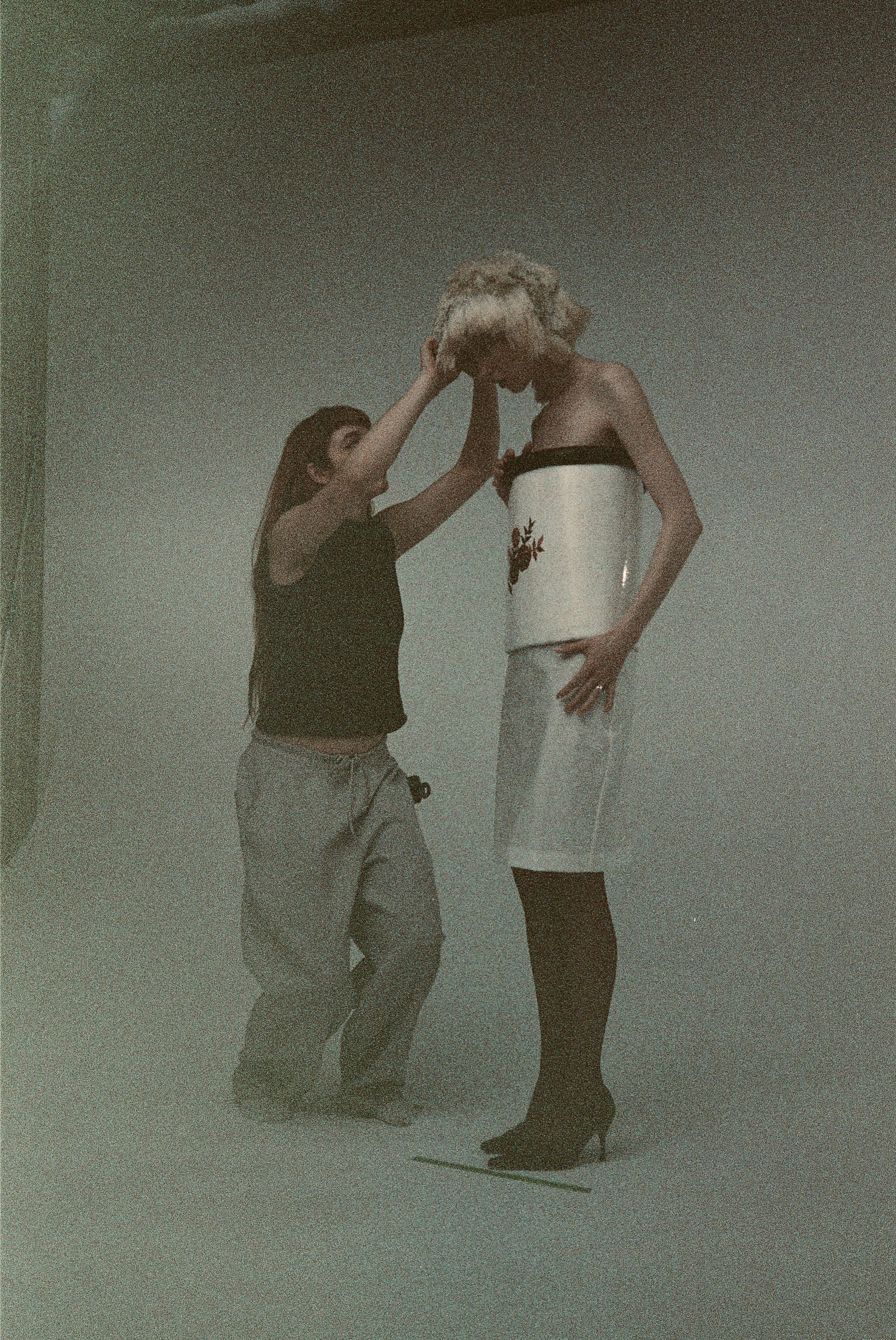
Visually, I wanted to blur the boundary between fashion and art, combining precise tailoring with sculptural interventions and unconventional materials such as resin, biomaterials and foam. Objects are transformed into garments, while garments start to function as objects. I also created wigs together with the garments to build characters and make the collection feel like its own world, rather than simply a series of looks.
Which materials, techniques, programmes and/or applications are you mostly interested in?
I work a lot with leather and skins, mostly deadstock leather, as well as wool and self-made biomaterials. I’m particularly interested in surface treatments and in experimenting with materials beyond their intended purpose. In my work, I often use unconventional materials, for example resin and EVA foam in my graduation collection, to create sculptural pieces and objects.
I also use 3D programmes when they can make the process more efficient or when I’m developing art objects, combining digital tools with hands-on making and traditional fashion techniques.
Photography André Schilder
The exhibition you are a part of looks into the connect between animals, people, and place (flock, folk, field). What does this mean to you and how do you see it reflected in your work?
I think this connects quite naturally to my practice, especially through my use of animal materials and my interest in where materials come from. I often work with leather, skins, wool and other materials that carry a physical connection to animals and their origins. For example, the sheepskin I used for the wigs in my graduation collection came from sheep raised by my family, which makes the material particularly personal to me.
There is also a strong connection to place in my work. I come from a small village in Slovakia, and a lot of my references come from the objects, materials and ways of making I grew up around. For me, flock, folk, field is about these relationships, between people, animals, materials and the places that shape them.
How do you perceive the meaning and importance of community within the fashion field?
I think community is a really important, almost fundamental part of working in a creative environment. Everyone in your circle influences the way you see things and can inspire you in completely different ways. Networking is a big part of that, but for me it’s also about building genuine connections and joining forces. As a designer, you’re constantly working with photographers, stylists, models, artists and other designers, and I really like that sense of a creative community where everyone brings something different to the process.
Photography Jeremy Wojcicki
How do you view the future of fashion? And your own role therein?
I think the future of fashion is difficult to predict because it is constantly changing and fluctuating. I would like to see the industry become more accessible, with more space for emerging talent and less dependence on who you already know or are connected to. Despite all its challenges, fashion is still a field I feel strongly connected to, and I can’t imagine not being part of it.
For my own role, I want to reflect what is happening around me while creating something new and fresh through my own point of view. I’m interested in building my own identity by combining fashion and art, technology and craftsmanship, and continuing to explore where those things can meet.