
Fleece, Flora & Fauna - Összefonódás
by Marcell Csillag
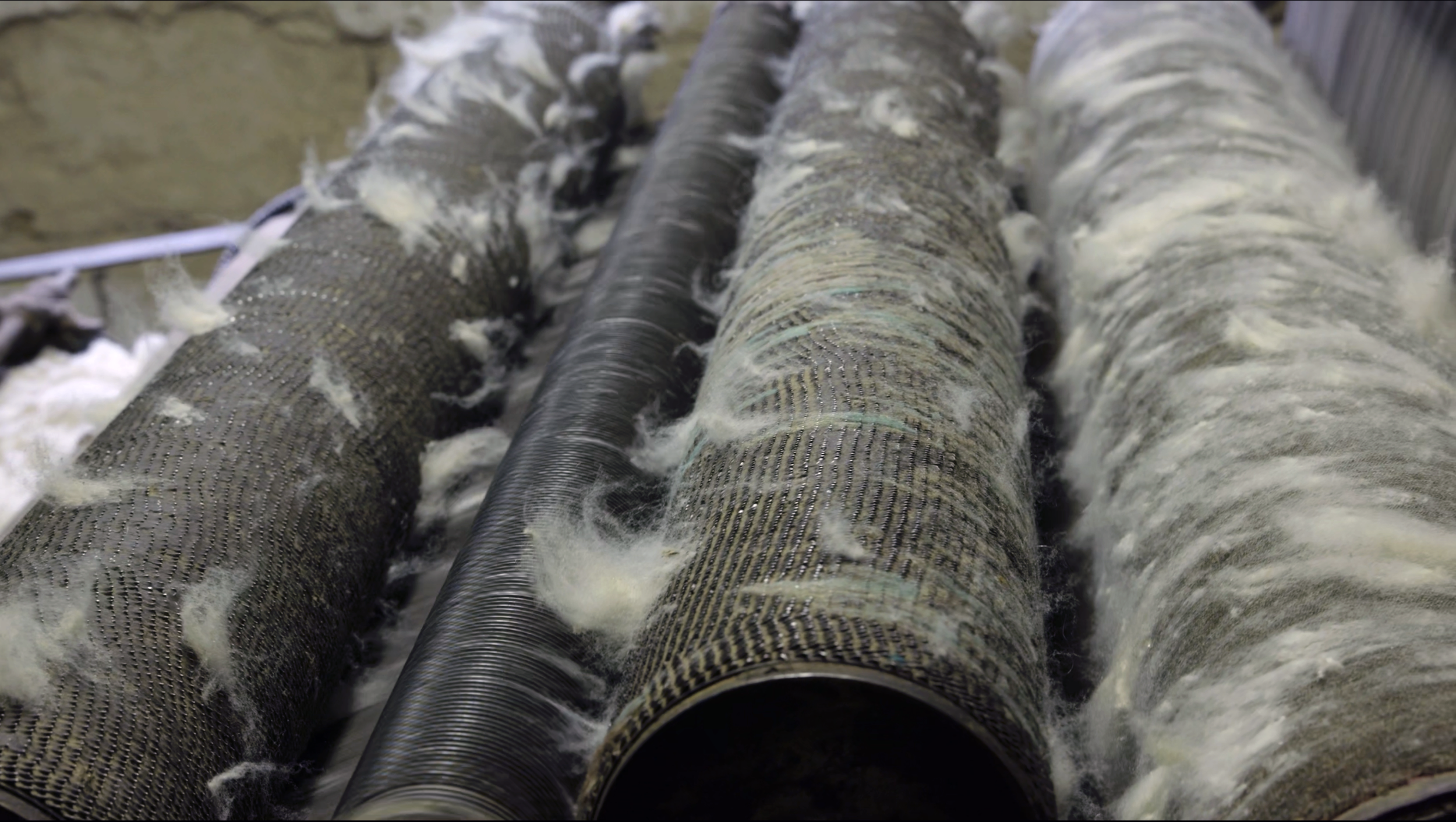
This body of work seeks to address the underutilisation of autochthonous wool in Hungary by exploring local capacities and opportunities for synergies to process the fibre. A key focus is to revive and reinvent wool industry through research, design thinking and new modes of production fostering place-based collaborations that promote innovative approaches and preserve traditional practices. Moving beyond the structural limitations of extractive models, the project aims to reimagine fibre processing systems in an intra-local mode of production that enables cooperation and cocreation between partners in place. By empowering communities to emerge, share resources and exchange knowledge, the project intended to establish partnerships creating pathways for wool’s wider adoption across fields, expanding fibre capacities and its applications. Ultimately, the holistic vision of the project is to restore and secure the resilience for Hungary’s natural grassland habitats preserved by pastoral farming traditions for centuries through strengthening the interconnections and mutual support systems among the living communities sustaining them.
About Marcell Csillag
Coming from a textile and fashion design background Csillag developed a deep interest in indiginous materials, manufacturing processes and local production systems in the world of fibres and textiles. Recently completing his Master’s degree in Regenerative Design at Central Saint Martins, where he built on his background to explore how design can engage with living systems in place. His research is focused on the landscape ecology of Hungary and the relationship between local fibre production and regional ecosystems. Examining the role of native Hungarian sheep breeds and the potential of local wool utilisation, he explores opportunities for both environmental, cultural and relational regeneration.
“I'm driven in reconnecting design with natural systems, reviving traditional practices through innovative approaches, and supporting thriving living communities.”