
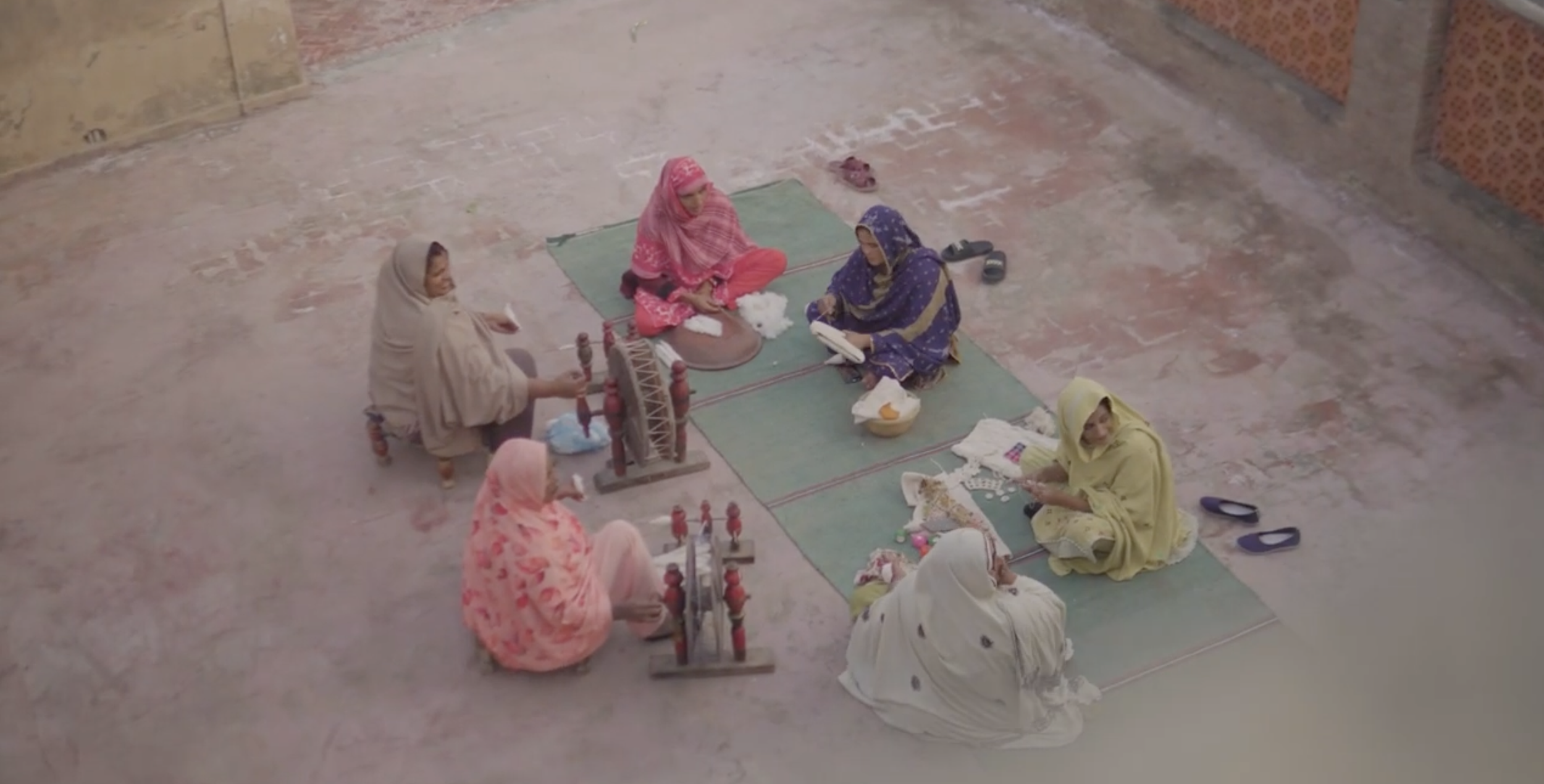
Ishq de Baajhon Bia Sabh Koorrh (Without Love Everything Else Is a Lie) is a short moving-image work reflecting on love as an ethic of making, living and resisting. Bringing together images of industrial production with those of indigenous and craft communities, the film considers two very different relationships with material, labour and the more-than-human world. Industrial systems appear through extraction: of natural resources, human labour and cultural knowledge. Alongside them are ways of making rooted in intimacy with land, materials, animals, plants and community, where knowledge is inherited through living, observing and making together, and where care places limits on what we take. The film draws upon Punjabi and Sindhi Sufi thought, using verses by Sachal Sarmast sung by folk singer Saleema Jawad Khawaja. The recurring proposition frames love not simply as emotion, but as a way of relating through reciprocity, responsibility and coexistence. Yet these ways of living are themselves increasingly precarious. The film therefore also considers resistance: those who refuse extractive orders often bear their consequences. It asks what might change if fashion began not with production, but with relationship, and with care for people, materials and more-than-human life.
About Abdul Rehman
Abdul Rehman’s practice moves between textiles, clothing, moving image, visual ethnography and community-based research, exploring how material culture holds relationships between people, place and the more-than-human world. Working closely with craft and Indigenous communities across Pakistan, he explores knowledge carried through making, memory, landscape and intergenerational exchange. Through film, garments, installations and research, he looks toward local and inherited practices of spinning, weaving, natural dyeing and garment-making as ways of thinking about ecological interdependence, care and resistance. His collaborative, long-term approach asks how fashion might be understood not as an isolated industry, but as part of a living network of human and more-than-human relationships.
“Indigenous cotton, hand-spinning and weaving, natural dyes, block printing and inherited garment forms become ways of thinking about interdependence rather than simply techniques to preserve.”