
Education: Human-Animal Relations
How are soil, sheep and society entangled?
Every lock of wool traces a dependency between sheep and pasture, farmer and flock, maker and material. To follow the fibre is to follow a web of connections that stretches from local landscapes to global economies.
Wool embodies the entanglement of ecology and culture. Sheep graze and maintain landscapes, their fleeces catching plants and carrying the scent of seasons. Farmers balance livelihoods with care for animals. This reality contrasts with large scale sheep farming where sheep are seen as commodities for consumption. To move towards regenerative fashion the search for alternative approaches to extraction or efficiency models within material sourcing is vital. Designers become a part of this web through translating raw fibre into fabrics, garments, objects and stories.
To see wool in this way is to recognise that materials always come from a source. They are part of living systems where soil, sheep and society shape one another, reminding us that regeneration is rooted in relationship.
Why do we need to reconsider and reshape the present day outlook on sheep and other animals? We asked Femke de Vries and Textile Exchange to put forward their research into human and animal relationship to help steer the conversation.
For nine days of Dutch Design Week(DDW) two research films were on display. These films inspire us to look at animals as closely connected to us and to see textiles as a way to care for animals. Through showing the humanlike experiences of sheep and alpacas, these works highlight the need for care and welfare of animals.
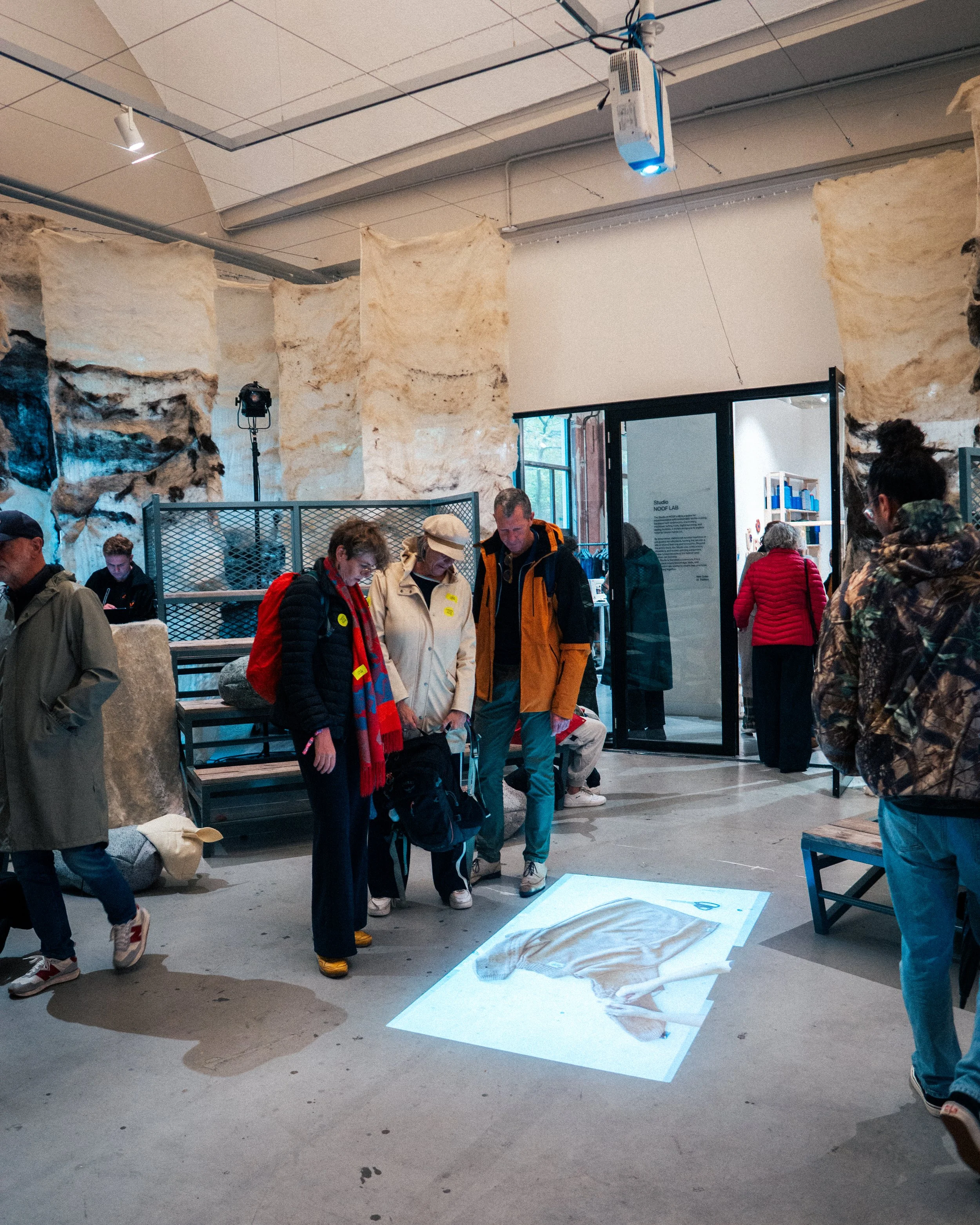
Telling Tremors – No. 1: “Sheep Have Good Memories.”
At DDW we had Episode No. 1, “Sheep Have Good Memories,” from Telling Tremors on display. In this work, PhD researcher Femke de Vries uses “garment vivisection,” combining film, text, and imagery to reveal the often-overlooked lives and agency of the sheep behind wool clothing.
While fashion discourse increasingly gives garments their own agency and biographies, it still ignores the nonhuman animals whose lives are shaped by a human-supremacist view that treats them as objects serving human identity. Telling Tremors counters this through garment vivisection and assemblage, proposing new narratives about the animals behind materials, with “Sheep Have Good Memories” presenting the sheep behind a woollen sweater as beings with lives of their own.
Telling Tremors was made in close collaboration with Youngeun Sohn (filming and editing). Supported by Amarte.
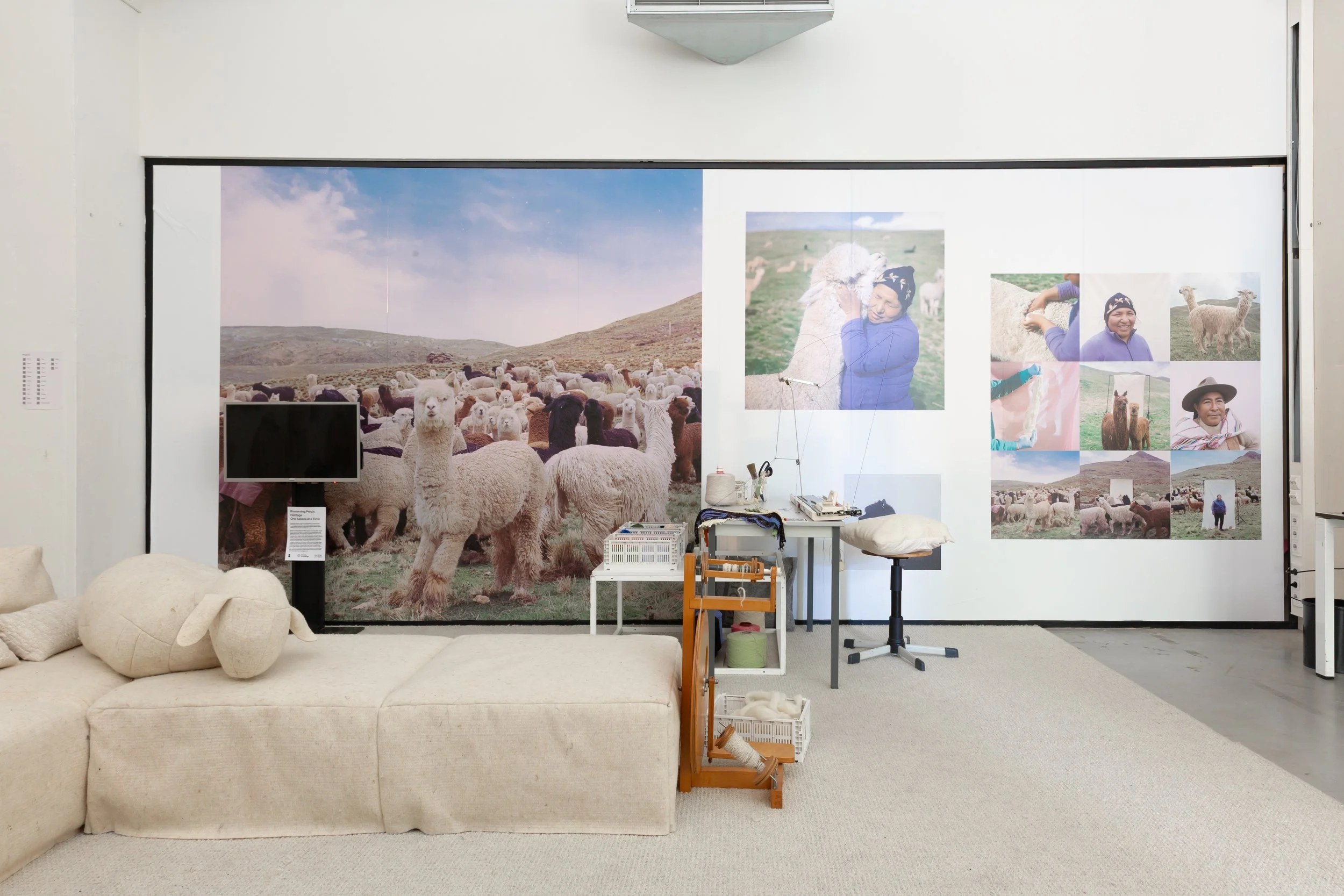
Preserving Peru’s Heritage One Alpaca at a Time
During DDW, we also presented Preserving Peru’s Heritage One Alpaca at a Time, featuring the award-winning film and photographic work of Alejandra Orosco. The project shows the close bond between alpacas and the female farmers who care for them. It was created in collaboration with Textile Exchange, the organization behind the Responsible Alpaca Standard that places animal welfare at its core.
Orosco’s work explores identity, colonisation and untold stories, encouraging viewers to recognise distant realities while finding common ground with their own. Based in Peru’s Sacred Valley, she won the 2024 Textile Exchange photography competition with Magnum Photos, which took her to the Diaz family’s Responsible Alpaca Standard-certified farm in Juliaca, Puno. In the high Andes, alpacas have supported families for generations as both a livelihood and part of daily life. The project follows farmer Evelyn Diaz, who works to protect this bond while facing climate change, economic pressures and shifting traditions. Though they face harsh conditions at over 4,500 meters above sea level, Evelyn and her partner have improved animal welfare and reduced mortality rates over time through partnerships with local authorities and innovative herd management.
Written by Pollyanna Moss and Dina Beganović
Photography by Rechard Motieram