
Activation: How can care transform what seems broken?
Wool is often overlooked as a local resource, while garments made from it are easily replaced rather than cared for. This points to a broader need for people to take responsibility for the fibres and resources around them, as well as for the garments they already own. By paying attention to how materials are sourced, used, and maintained, value can be preserved and extended over time.
At Dutch Design Week, NOOF showcased what such care can look like in practice. Through local wool, making processes, and acts of repair, the exhibition highlighted ways of reconnecting materials, garments, and people.
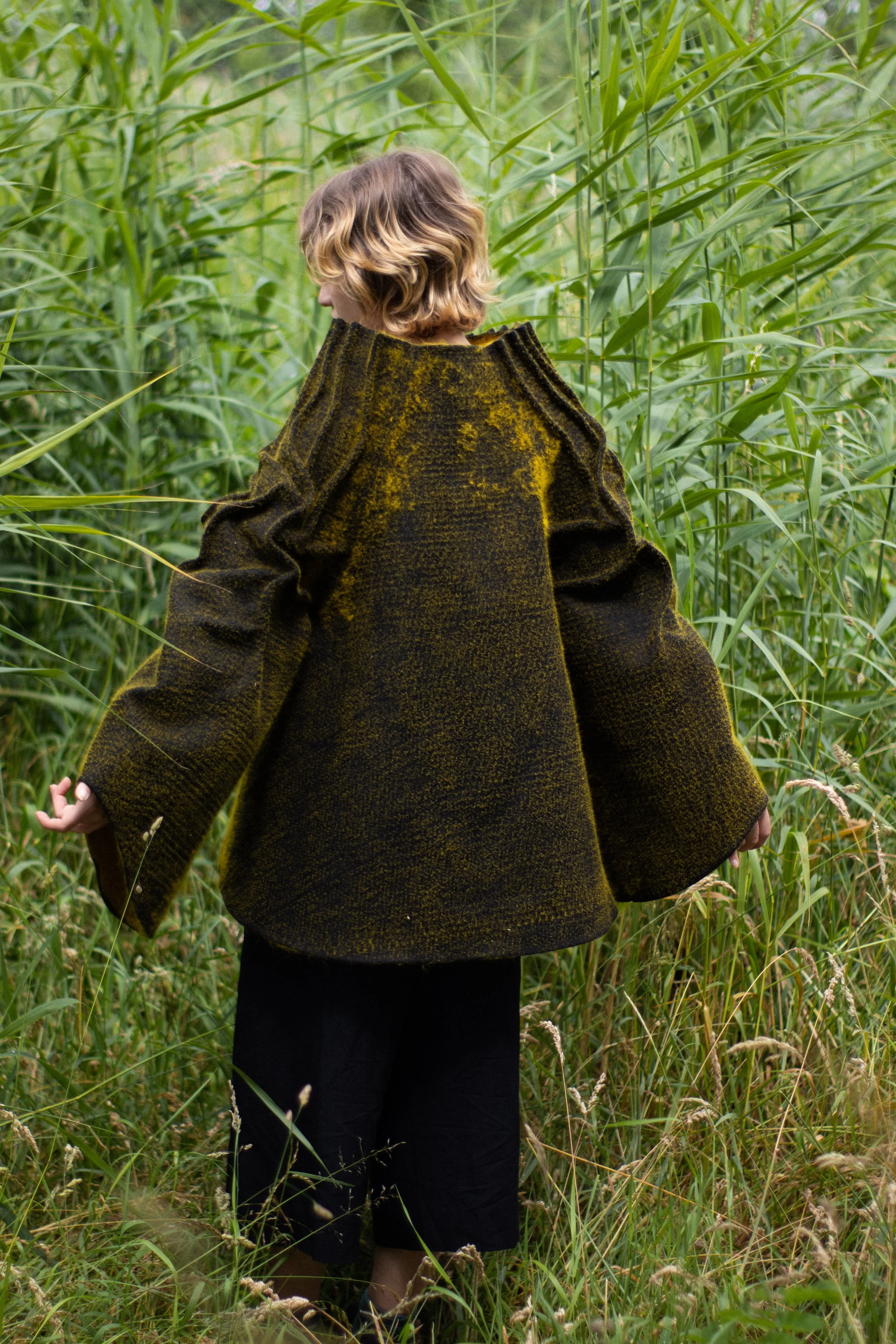
Jacket designed by Rebecca Fowden, photography by Baylor Watts
Boldwool – Lennart van Bolderick
Boldwool makes use of the often unused Dutch wool. On site, wool is cleaned, carded and needle-felted into sturdy sheet materials for footwear, outerwear and interior use. The focus is simple: use what is here, make it last, and return fair value to the people who raise the sheep.
For this exhibition, Boldwool collaborated with Collectie Arnhem TWENTYFIVE to create a hybrid textile by felting coarse local wool onto recycled fabrics.
The felting loom was present in the NOOF LAB so visitors can see the process up close. What if a machine can show how value is made, stitch by stitch, from fibres once considered of little worth?
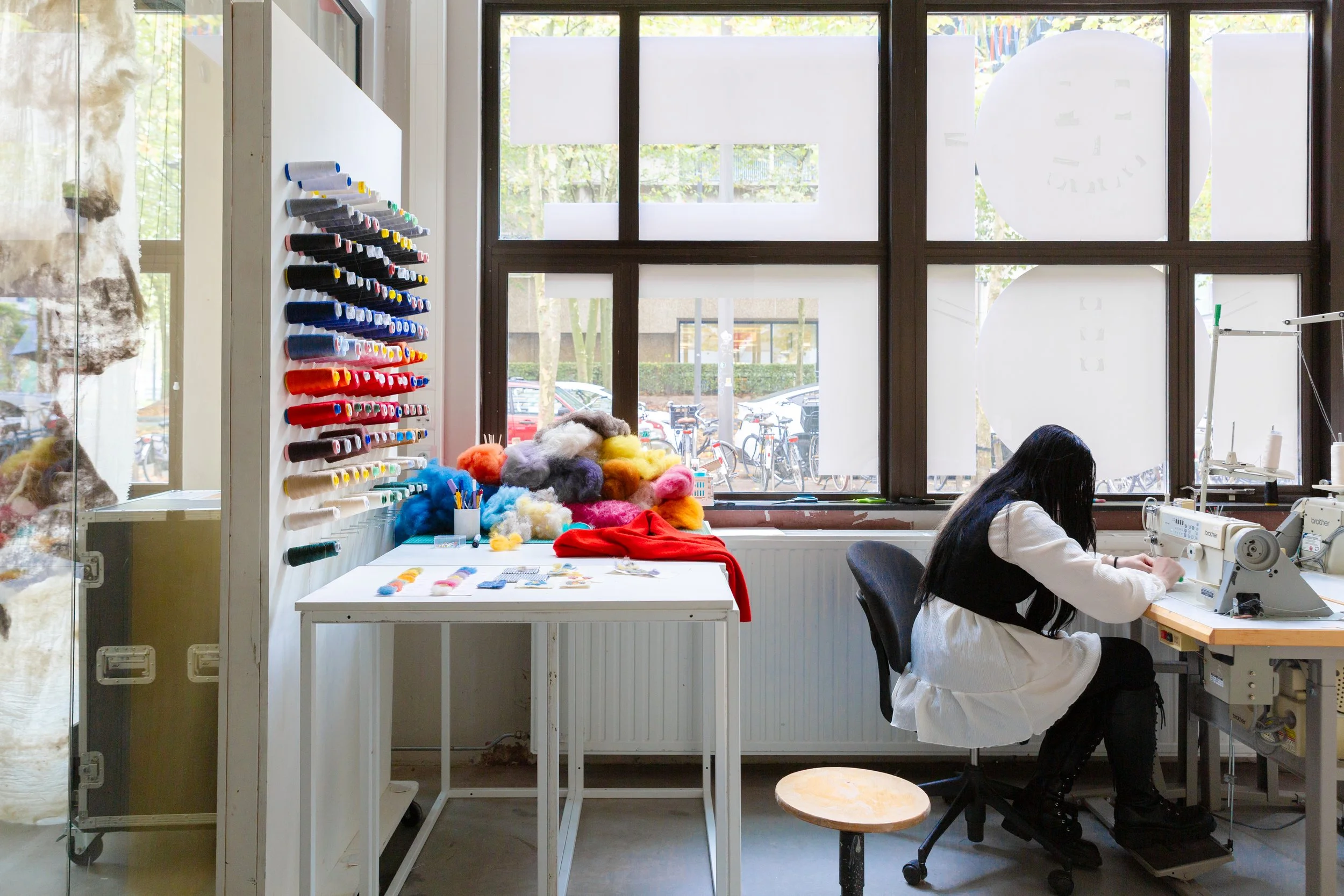
Wool Repair Station
The Wool Repair Station invited visitors to extend the life of garments through acts of care. Inspired by traditions of visible mending and contemporary repair culture, it turned maintenance into design.
Here, wool became both material and metaphor, showing how repair is not just about fixing what is broken but about nurturing connections between people, fibres and the world we inhabit.
In every stitch lies a reminder: regeneration often begins small, with gestures of attention that accumulate into practices of renewal.
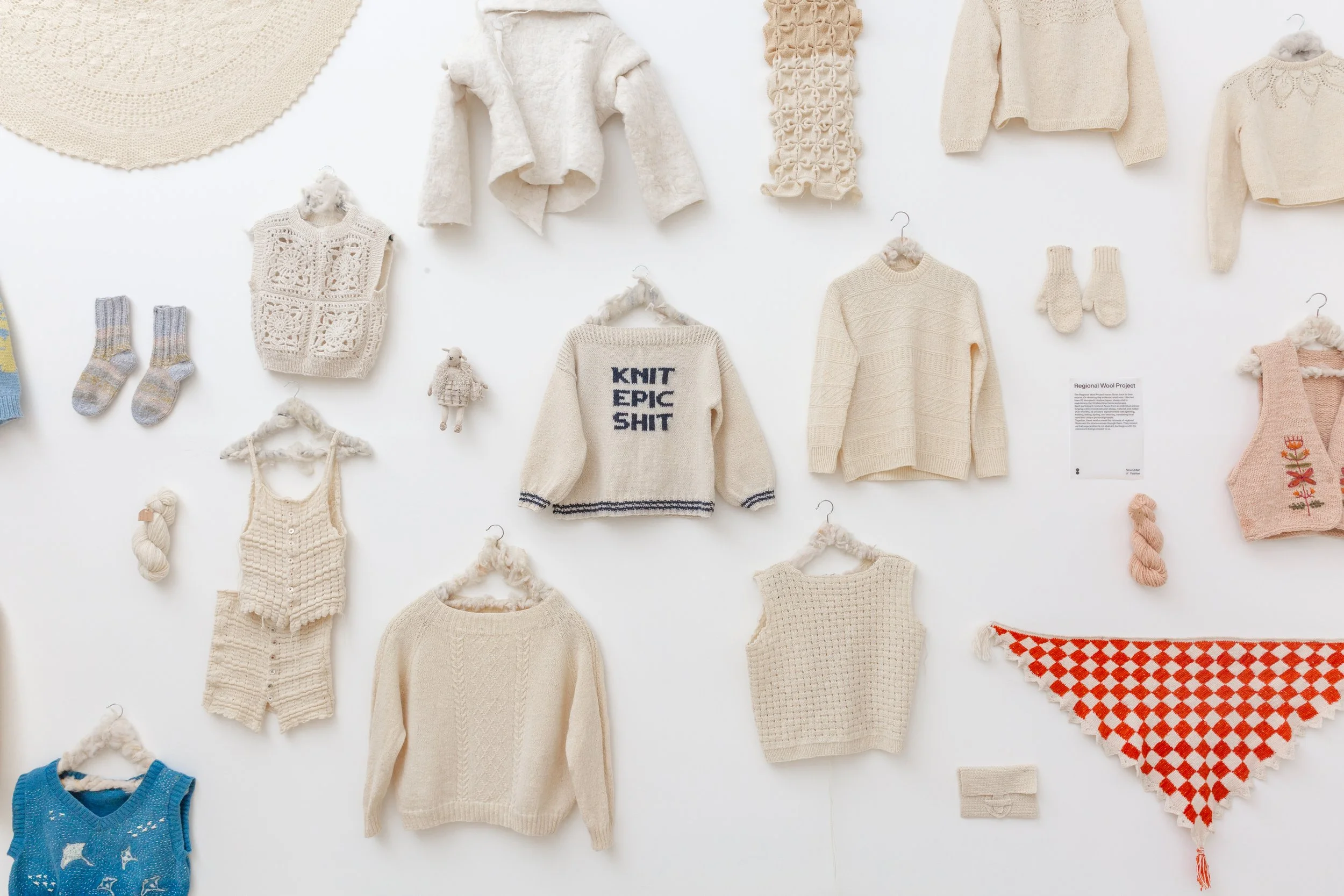
Regional Wool Project
The Regional Wool Project traces fibres back to their source. On shearing day in Heeze, wool was collected from 25 Kempisch Heideschapen, sheep vital to maintaining the Strabrechtse Heide landscape. Over multiple months, 25 creators experimented with spinning, knitting, felting, dyeing and weaving, translating local wool into unique personal projects. They remind us that regeneration is not abstract, but begins with the places and beings closest to us. Their full collection and information about each piece can be found here.
Caring for wool means caring for the resources and garments around us. By engaging with local fibres, repair, and thoughtful making, value is created and preserved in meaningful ways. These projects show that regeneration is possible when we approach materials, processes, and relationships with attention and intention.
Written by Pollyanna Moss and Dina Beganović
Photography by Anwyn Howarth